
Five minutes into building with AI, something impressive appears on screen. The dashboard renders, the buttons click, and a founder concludes the hard part is behind them. That reaction is the wow, and it is the costliest moment in early product building, because it arrives long before anything has been proven.
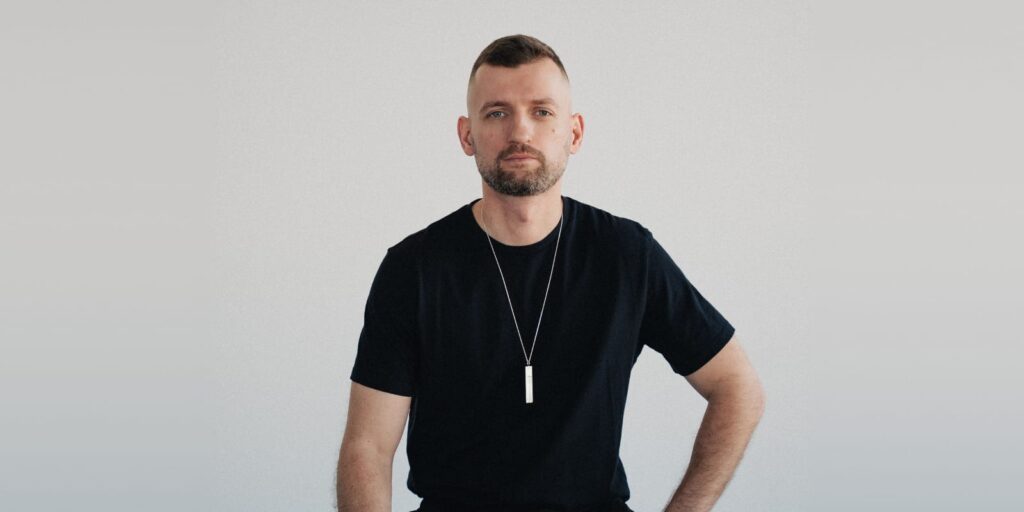
Vitalii Sydorenko has watched founders mistake that moment for a finish line often enough to build a company around the gap. That company is beyond the wow, an AI-native MVP studio for early-stage founders, built for everything that comes after the screen looks done. It is the sister studio of Gearheart, the product studio where he has shipped more than 80 products over 14 years.
The pattern shows up in his code reviews. Founders bring prototypes built in Lovable or Replit and ask the team to just fix the back end. Vitalii often finds a polished front end, sometimes hardcoded data, and no real API, no database, no business logic, and serious security holes. It looks like a product, he says, but it is not one.
The mistake is natural. Without a technical background, the front end feels like 90 percent of the product because it is the part you can click. As Vitalii puts it, “the cost is 6 months or so founders spend believing they’re 90% done when they’re actually at 10%.” He calls that “false sense of progress” a killer of early-stage companies.
What waits beyond the wow is unglamorous. At beyond the wow, production-ready means real auth, a real database, real error handling, and real infrastructure. In his view, AI has made the first stretch nearly free, but each of those pieces still needs a senior engineer’s judgment, and none of them shows up in a demo.
Vitalii describes the experience in terms most builders recognize. After that first result lands, “you try to build this last ten percent,” and he says it is the hardest part. That is the stretch where AI iteration stops feeling like magic and starts feeling like work.
Used well, though, the wow becomes a research tool. A founder with 20 years in medical device sales came to Vitalii certain he knew what to build. After one week of development, the team realized he knew the problem but not the product, so they stopped, built clickable prototypes, and sent him to customers.
Over about a month, he showed more than 10 versions to prospective buyers, changing screens during the calls themselves. Vitalii says that with AI, 10 iterations take 10 hours. The old process would have produced one version in at least two months and at least $50,000. Here, the validation phase and an MVP ready to sell cost about $25,000, and the MVP itself came in under $10,000.
What mattered most, he says, was access rather than speed. That founder could get 10 prospective customers on calls in his first months. When Vitalii built his second startup in a niche where he knew nobody, booking those calls took months. His lesson: niche expertise is less about knowledge than about who will pick up the phone.
The same startup taught him what happens when validation gets mistaken for growth. The first customer arrived fast, a funding round followed, and the team pushed to scale. The product fit its first 10 customers, not the next 50, and it began to crash. He says the fix is not to mix up the two stages.
His test for any founder holding an impressive demo is to ask where the weakest link sits: the sales pipeline or the product backlog. If no paying customer or waiting-list name is blocked on a missing capability, more building is the wrong spend. When someone is, the real work begins beyond the wow.