

An electric bike may look impressive on paper, with strong motor specifications, a substantial battery and a long list of features. But these figures do not answer a more practical question: how convenient is the bike to use every day?
Consider someone who cycles to work in the morning, stops at a supermarket on the way home and then needs to store the bike in a residential storage area. Throughout the day, the bike may need to be stopped, restarted, turned around and moved by hand. Even if its motor performs well, difficulties with mounting, charging or manoeuvring can still affect the overall experience.
This is an often-overlooked aspect of electric bike design. Consumers are not simply buying a motor and a battery. They are investing in a product that needs to be operated, maintained and used over an extended period.
As different types of electric bikes enter the market, competition is no longer limited to motor performance and battery range. Frame design, ease of operation and long-term maintenance also influence how consumers evaluate a product.
Product Specifications Explain Performance, but Not the Entire Riding Experience
Motor power, battery capacity and torque are among the specifications consumers commonly compare when choosing an electric bike. However, these figures need to be understood in the context of actual use.
For example, motor output influences how a bike performs during acceleration, climbing and sustained riding. Battery capacity provides an indication of available energy, but real-world range also depends on rider weight, gradients, temperature, tyre pressure and assistance settings.
The problem is that consumers can easily treat a specification sheet as a complete picture of what a product offers.
In reality, two electric bikes with similar motor and battery specifications can deliver quite different experiences. One may have a frame that makes mounting and dismounting easier, while another may be more convenient to park and manoeuvre. For urban riders who make frequent stops, these differences can matter more than a modest increase in a particular specification.
This is where product design becomes important. Its value lies in turning technical capabilities into practical benefits. A feature should not be judged solely by its technical specifications, but also by whether it addresses a problem that users encounter in everyday life.
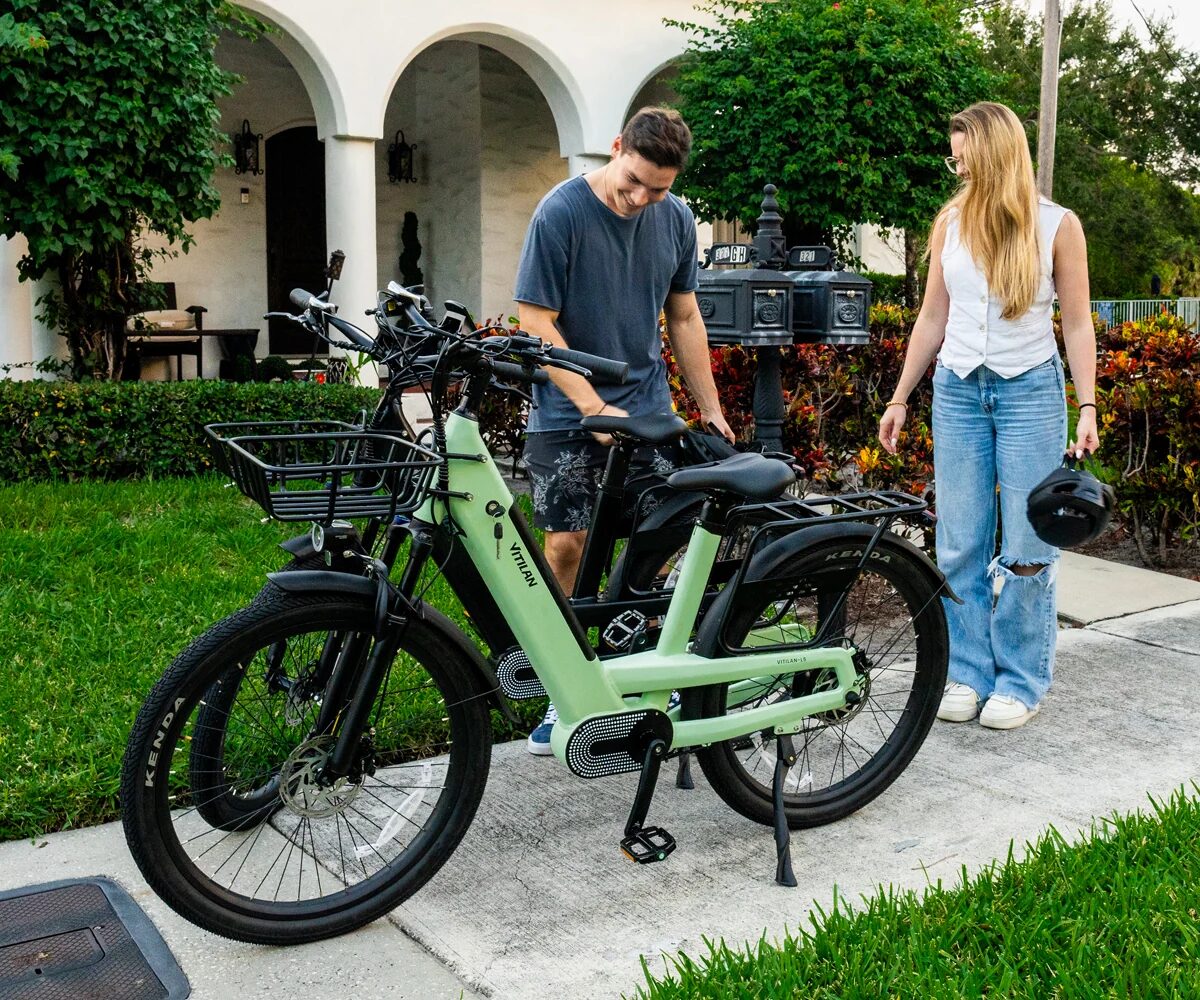
Step-Through Frames Change More Than Appearance: They Change How People Use a Bike
Frame design is one of the most easily overlooked aspects of an electric bike, yet it can have a considerable influence on everyday usability.
Traditional high-step frames generally require riders to lift one leg over the top tube when getting on or off the bike. During uninterrupted riding, this may not present much of a challenge. However, repeatedly mounting and dismounting throughout the day can become less convenient.
Step-through frames reduce this movement by lowering the top tube or adopting a more open frame structure.
The practical benefits become particularly noticeable when making frequent stops.
For example, commuters wearing business attire or everyday clothing may prefer a frame that does not require a high leg movement. People travelling between shops, offices and residential buildings can also benefit from easier mounting and dismounting. For riders carrying shopping bags or other items, an open frame can make getting on and off the bike less restrictive.
For this reason, step-through electric bikes should not simply be categorised as products for women or older riders. They address a more general usability issue: making a bicycle easier to incorporate into different daily routines.
Of course, step-through designs also introduce engineering considerations. By reducing the traditional top-tube structure, manufacturers still need to maintain adequate frame stiffness through the down tube, connection points and overall frame layout. Battery positioning, total weight and structural strength must also be considered together.
This shows that a step-through design involves more than changing the appearance of a frame. It requires a different approach to balancing structural engineering with practical usability.
Long-Term Usability Depends on Charging, Maintenance and Everyday Management
When buying a product, consumers often focus first on the purchase price and headline specifications. However, many details that shape long-term satisfaction only become apparent after regular use.
The battery is a good example.
For people living in apartments without a private garage or convenient charging point, a removable battery can make a meaningful difference. Instead of moving the entire bike to a charging location, riders can remove the battery and charge it somewhere more accessible.
However, removable battery designs also need to account for locking mechanisms, protection and how easily the battery can be taken out and reinstalled. Battery capacity matters, but charging convenience is also part of the overall product experience.
Maintenance is another consideration.
Tyres, brake pads, drivetrains and batteries all require attention over time. For long-term owners, the availability of replacement parts, the clarity of maintenance procedures and the manufacturer’s ongoing technical support can all influence how they evaluate a product.
Other details are easy to overlook, including whether the display is easy to read, whether the control buttons are convenient to operate and how easily the bike can be moved when parked.
These features may not appear among the main selling points in product advertising, but they can make a difference throughout everyday ownership.
From a business perspective, a product’s competitiveness should not be measured solely at the point of purchase. Whether consumers continue using it, find it easy to maintain and are willing to recommend it to others are also important considerations in product design.
How Can Consumers Decide Whether an Electric Bike Suits Their Daily Routine?
Different riders have different expectations of an electric bike. Rather than automatically choosing the model with the most features, it makes more sense to identify the problems the bike needs to solve.
For someone travelling between home and work every day, convenient mounting, easy parking and accessible battery charging may be more important than an elaborate suspension system.
Riders who regularly encounter hills should pay closer attention to motor output, torque response and how the gearing system works with the motor. Those who frequently travel over uneven surfaces may also need to consider tyre design, front forks and suspension configuration.
Before purchasing, it is worth examining four areas:
Intended use: Will the bike mainly be used for commuting, shopping, weekend leisure rides or a combination of activities? Different routes place different demands on the frame and power system.
Frame design and riding position: Is the bike easy to get on and off? Can the saddle height and handlebar position be adjusted appropriately? Does the overall frame size suit the rider’s proportions?
Battery and charging: Is the battery removable? Does the available range cover typical journeys? Are there suitable charging facilities at home or work?
Maintenance and after-sales support: Are replacement parts readily available? Are the brakes, tyres and drivetrain easy to inspect? Does the manufacturer provide ongoing customer support?
These questions may seem straightforward, but they help consumers avoid a common purchasing mistake: focusing on one impressive specification while overlooking whether the entire bike actually suits their lifestyle.
What Should an Electric Bike Offer for Everyday Urban Riding?
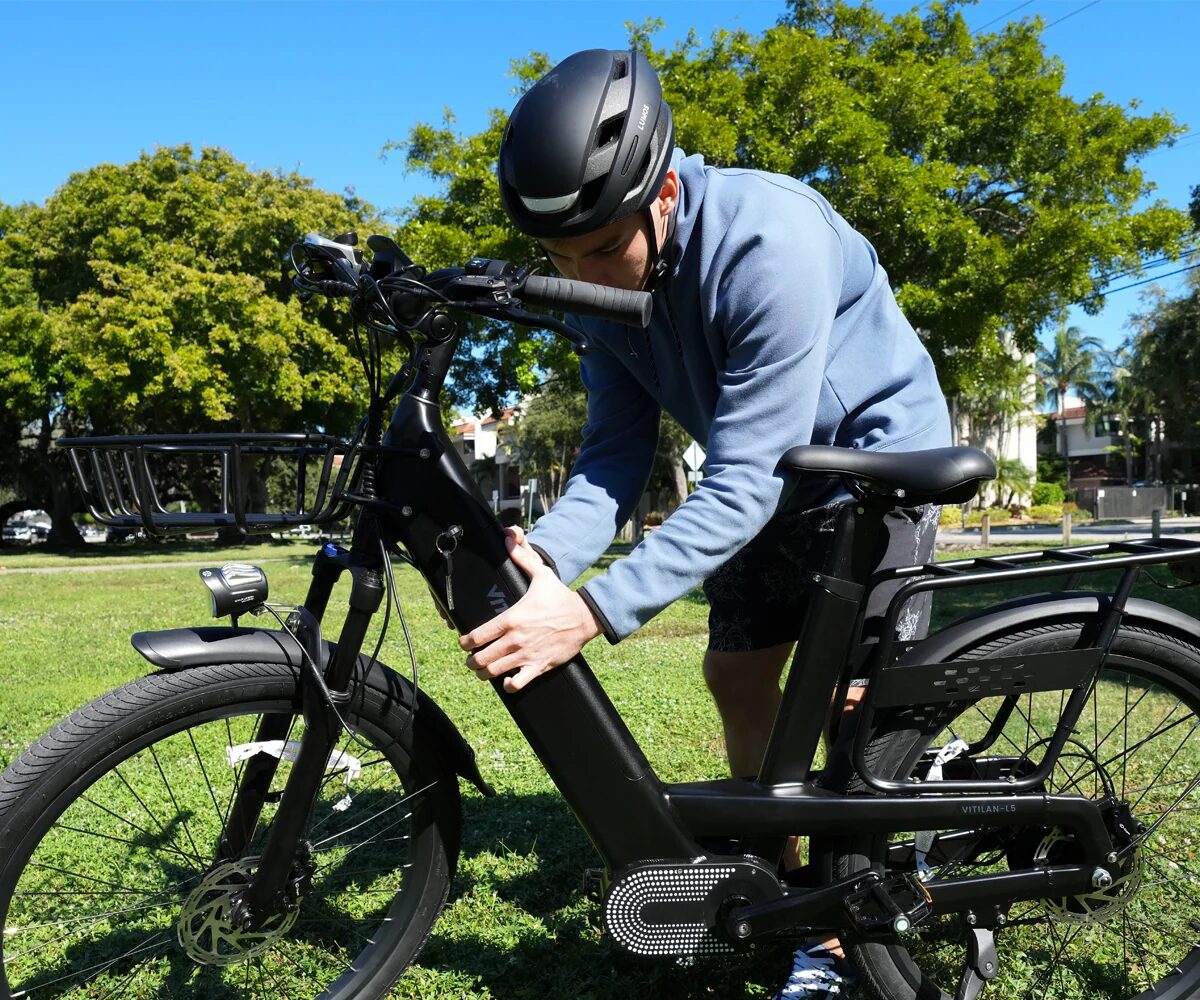
Electric bikes designed for urban use generally need to balance convenience, power, handling and ease of maintenance. Step-through frames, removable batteries and accessible control systems are all design choices that can be evaluated from a practical perspective.
The VITILAN L5 provides an example of how these features can come together.
It features a step-through frame, a removable 48V 15Ah battery and a Shimano seven-speed drivetrain. For riders who need to bring their battery indoors for charging or adjust their gearing to suit different gradients, these features address separate everyday requirements.
In terms of power and control, the L5 is listed with a 500W/960W motor, a stated speed of 25 km/h, a torque sensor and a thumb throttle. The torque sensor adjusts assistance according to the force applied to the pedals, while the thumb throttle provides an alternative way to control power output.
The bike also features an adjustable spring front fork and 180mm hydraulic disc brakes at both the front and rear. The front fork helps absorb some road impacts, while the hydraulic braking system provides braking control.
These specifications are not necessarily better simply because there are more of them. Their value depends on how they relate to the intended riding conditions. A removable battery, for example, offers charging convenience; the seven-speed drivetrain helps riders adapt to different gradients; and the front fork and braking system serve different purposes in managing road conditions and controlling the bike.
Of course, overall weight, physical dimensions and local regulations should also be considered. Specifications and operating requirements may differ between regional versions, so consumers should always refer to the product information for their intended market.
This example illustrates an important point: good product design is not about fitting every possible feature onto one bike. It is about giving each component a clear practical purpose. The VITILAN range offers further examples of different frame designs and feature combinations.
The Competitiveness of Electric Bikes Ultimately Depends on Solving Real Problems
Competition in the electric bike market is moving beyond simple comparisons of motor power and battery capacity.
The power system determines the performance a bike can deliver, while frame design, charging arrangements, ease of operation and maintenance influence how well those capabilities fit into everyday life.
A step-through frame is just one example. It does not change the fundamental operating principles of an electric bike, but it can address a recurring inconvenience for certain riders by making mounting and dismounting easier.
For manufacturers, meaningful product innovation does not necessarily mean adding more features. Making bikes easier to use, simpler to maintain and better suited to real-world routines is equally important to long-term competitiveness.