
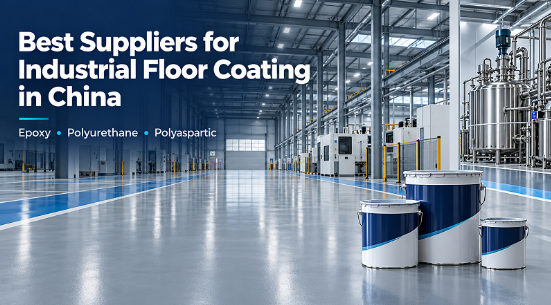
A warehouse floor takes a beating from loaded forklifts all day. A production line gets oil, impact and daily washdowns. A food plant and an electronics assembly shop? Completely different floors, even if the square meters match.
That’s the real difficulty when you source from China. Finding a factory that sells epoxy is easy. Finding one that turns your site conditions into a workable material specification takes more effort.
The best suppliers pair suitable products with clear technical documents, steady production and people who pick up the phone after the sale. If you’re a distributor or private-label brand, add packaging flexibility and formulation support to that list.
Below are three suppliers worth a look: Jincheng, Sika China and Flowcrete. One is a Chinese manufacturer, two are international brands serving the Chinese market. This is a purchasing shortlist, not a lab-tested ranking.
What a good supplier asks before it quotes
Good suppliers ask about your floor first.
How sound is the concrete? What rolls across it? How is it cleaned? How long is the shutdown window? A quote built on square meters alone skips every one of those questions, and the answers change the system.
Picture two warehouses of identical size. One moves light cartons on manual pallet trucks. The other runs loaded forklifts around the clock over cracked joints. Same area, very different floor.
Before you accept any proposal, the supplier should be able to tell you which primer, body coat and topcoat work together, what surface preparation the system demands, how moisture in the slab affects the choice, what thickness and texture suit the job, when the floor can take foot traffic, machinery and chemicals, and how to maintain and repair it afterward.
Sika’s flooring guidance is a useful benchmark here. It weighs wear, chemical exposure, temperature, slip resistance, joints and installation details together instead of treating them as separate line items. Use the same yardstick on every supplier you talk to.
The three suppliers
Jincheng
Jincheng (jinchengresin.com) lists epoxy, polyurethane, polyaspartic and waterproof coatings. The catalog also covers primers, intermediate coats, topcoats, repair materials, tools and accessories. For a buyer who wants several parts of a flooring range from one source, that breadth matters.
The OEM and ODM side is where Jincheng stands out. The company describes private-label production, custom packaging, formulation adjustments, batch inspection and retained samples for traceability. Color, viscosity, solids content and application performance can be customized. All of this is supplier-reported, so confirm it during qualification.
Your first inquiry should say more than “epoxy resin price?” Give the target market, preferred packaging, application temperatures, expected floor performance and yearly volume. Then ask for a complete system, with samples of every component. For private label, settle the approved formula, label content, acceptance criteria and the process for authorizing future changes before the first order.
Best fit: distributors, private-label flooring brands and contractors who need customized material supply.
Sika China
Sika China covers electronics, pharmaceuticals, automotive plants, logistics and food production. Its Chinese flooring range handles dry production areas, wet processing zones, cleanrooms and antistatic environments.
Food and beverage is a good example of how it thinks. Sika points to systems such as Sika Ucrete and Sikafloor PurCem, with epoxy options for other parts of the same facility. One plant, several specifications. That’s normal, and you shouldn’t expect a single coating to cover a whole building.
Send Sika a detailed project brief and ask for the locally available system specification. Then pin down the supply channel, installation arrangements, scope of technical support and warranty terms.
One caution. Branded project supply doesn’t automatically include private-label manufacturing. If OEM production is your main goal, find out early whether that commercial model exists at all.
Best fit: industrial owners and project teams measuring branded systems against detailed engineering requirements.
Flowcrete
Flowcrete’s industrial range includes epoxy and polyurethane resin systems for manufacturing, warehouses, automotive facilities and assembly areas. Its official regional website lists a China contact channel.
That makes it a sensible comparison point when you’re weighing specialist resin systems. Ask for a recommendation tied to your actual operating environment, and confirm which products and services the China team can really deliver.
Ask for references too, and be picky about them. A polished showroom floor tells you almost nothing about a wet production line or a busy loading dock. You want a site with similar traffic, similar cleaning routines and similar exposure. Also ask whether the proposal covers materials only, installation support or a coordinated flooring package.
Best fit: buyers evaluating specialist resin systems for manufacturing and processing environments.
Send everyone the same brief
Write one specification and send it to every shortlisted supplier. Otherwise you end up comparing quotes that answer different questions.
| If this matters most | Ask for this |
|---|---|
| Heavy vehicle traffic | System thickness, wear data, joint details |
| Chemical exposure | Resistance data for your actual chemicals and concentrations |
| Short installation window | Working time, recoat intervals, return-to-service schedule |
| Private-label supply | Formula options, packaging, labeling, change-control process |
| Repeat orders | Batch acceptance limits, traceability, retained samples |
| Export purchasing | Shipping terms, documents, shelf life, storage requirements |
The lowest quote is rarely the lowest installed cost. Before you compare prices, check that every proposal assumes the same preparation, thickness, material quantities and performance targets.
Pick the system first, then negotiate
“Industrial floor coating” is a very wide category. Make each supplier explain why its chemistry and build-up suit your project.
If the proposal is epoxy, ask for evidence on adhesion, wear, chemical exposure and your type of concrete. If it’s polyurethane, find out what you’re getting: a thin-film topcoat, an elastic coating or a polyurethane cement system. They do very different jobs. If it’s polyaspartic, look hard at the installation window. How does temperature change working time, and when can the floor carry real traffic?
Fast cure doesn’t cancel the need for slab repairs, preparation or proper curing of the layers underneath. And a topcoat’s properties say little about the floor as a whole.
What you want is a complete written recommendation, with its limits stated plainly.
Read the paperwork before you approve a sample
Ask for the current technical data sheet and safety data sheet for every component.
The technical package should give mixing ratios, application conditions, recommended thickness, coverage, working time, recoat intervals and curing requirements. Check whether mixing ratios are by weight or by volume. People mix that up more often than you’d think.
Look at the conditions behind each number. A cure time with no temperature attached is hard to use. An abrasion result with no test method is hard to compare.
Moisture deserves precise wording. Which measurement method applies, and what reading does the system accept? A moisture-tolerant primer isn’t automatically a moisture vapor mitigation system.
If your project needs extra performance documentation, request reports for the exact product or system being quoted. A certificate for a different product family doesn’t count.
Test a real trial area
A small cured sample shows color and finish. That’s all it shows. It can’t tell you how the system mixes, spreads and recoats on site.
Ask for enough material to coat a representative trial area with the proposed primer, intermediate coat, aggregate and topcoat. During the trial, write down:
- ambient and substrate temperatures
- surface preparation and substrate condition
- batch numbers and mixing procedure
- actual material consumption
- application and recoat times
- appearance and agreed acceptance results
If you can, put the crew that will do the main job on the trial. They’ll spot problems a laboratory sample never would.
For repeat purchases, keep an approved reference sample and a written set of acceptance criteria. Later, if a delivery looks off, both sides have something concrete to point at.
Work out the cost per square meter
Price per kilogram helps with purchasing. It says little about what a finished floor costs.
A fairer comparison counts the quantity of every component the specified system needs, plus surface preparation, labor, freight, waste and downtime. Ask suppliers to separate theoretical coverage from practical allowances. Rough or porous concrete drinks up material, and repairs or leveling may sit outside the coating quote entirely.
Keep the comparison honest. A thin roller-applied finish and a thick aggregate-filled system are not the same product just because both get called epoxy.
In an operating facility, also count the cost of closing the area and the cost of an early repair. Those can easily outweigh a small difference in material price.
Plan for the second order
Supply reliability matters most after the first successful project.
Before a bulk order, agree on product codes, packaging sizes, shelf life at dispatch, lead times and the documents that ship with each batch. Decide who answers application questions and who handles complaints.
Private-label buyers have more to settle: who owns and can use the label artwork, who handles technical translations, and how formulation or raw-material changes get approved.
Start with a controlled order big enough to reflect normal production and delivery. Scale up only once the delivered material matches the approved samples and paperwork.
Choosing the right supplier
The best industrial floor coating supplier in China depends on what you’re buying and how you’ll use it.
Jincheng makes sense when customized supply and private-label development come first. Sika China and Flowcrete give you branded systems and project-specific specifications to compare against.
Send every candidate the same requirements. Review the technical evidence. Run a representative trial before you commit to volume.
To start a conversation with Jincheng, send your floor area, substrate condition, operating environment, installation schedule and packaging requirements. The more detail you give, the more useful the quote.