
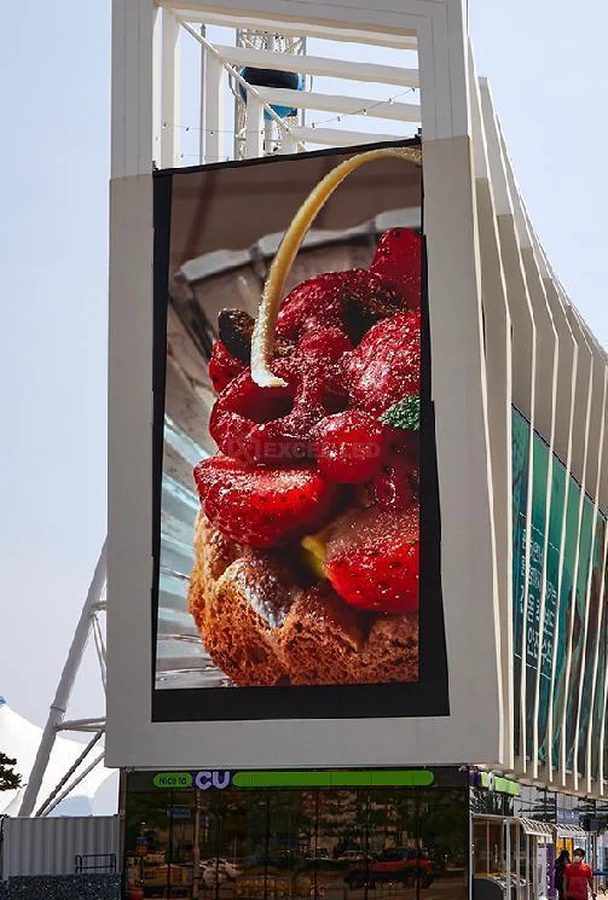
For example: a P4 display has a pixel pitch of 4mm, and a P10 display has a pixel pitch of 10mm. Both can provide bright outdoor images, but are best suited for different applications. It is a matter of choice between them that depends on the distance of the audience, complexity of the content, size of screens, and available investment.
- P4 and P5: High Detail for Close Viewing
P4 and P5 displays are suitable for use in places where nearby pedestrians or audiences need to see clear images, readable text, and detailed graphics. They have relatively dense pixel arrays, meaning they will maintain good visual definition at shorter distances than the larger-pitch alternatives.
P4 is the best choice for the storefront, pedestrian signage, and commercial applications where the viewer is close to the screen. P5 provides a practical compromise in terms of resolution and price for shopping plazas, urban streets and busy public areas. With the correct brightness and contrast settings, both can be used to present colorful promotions and video material.
These pitches are good to consider if the small text, product information, or fine graphics are important. However, if viewers are mostly viewing from a distance, then their extra pixel density may not make any big difference.
- P6: A Versatile Choice for Commercial Outdoor Projects
P6 is a great balance of viewing clarity and outdoor format size. It provides sufficient detail for many commercial applications, but not the number of pixels of the smaller-pitch screens.
P6 pitch Outdoor LED Display can be used in commercial plazas, building entrances, elevated advertising screens, and certain stadium projects, where visibility, scale, and investment are required. This is still subject to the actual viewing distance, content design, and screen placement.
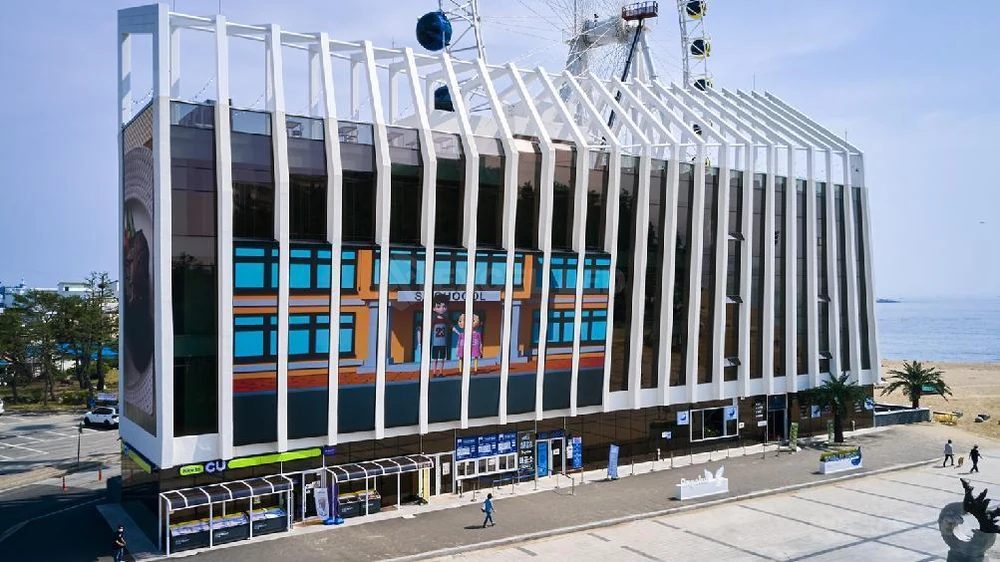
P6 can also dynamically display advertising, promotional video clips and public messages on large display surfaces. Consider how viewers will interact with it before choosing it – will they come up to it or view it primarily from a distance over a road or open area? That difference may be useful in determining whether or not P5 provides useful further information, or whether P8 is more useful in general.
- P8 and P10: Efficient Solutions for Long-Distance Viewing
The P8 and P10 displays are designed to be viewed from a greater distance. They are spaced further apart, reducing the density of the pixels, and this allows control of hardware costs in large installations.
P8 is a general standard that is typically applied to highway billboards, high commercial displays, and larger advertising structures viewed from 30m or greater. P10 is particularly suited for signage that is set away from the road or for high towers for billboards and large stadium displays, where the person can’t be close to the screen.
These options are geared towards broad shots and effects rather than close-ups. The use of appropriate text size, high contrast, and familiar graphics will ensure that the content is readable from a distance. If you’re making a huge screen, it’s not a great idea to make it really big because they’re sitting right next to you to please the audience.
- Matching Pixel Pitch to Project Requirements
The optimum selection process starts with the viewing environment and not only the physical size of the screen. It’s not hard to narrow down the choices when you consider 3 things.
Key Selection Factors
- Viewing distance: P4 and P5 suit closer audiences, while P8 and P10 favor longer viewing distances.
- Content complexity: Detailed product visuals and small text generally benefit from higher pixel density.
- Screen size: Large installations can use wider pitches when audiences view them from substantial distances.
- Budget allocation: Smaller pitches usually cost more per square meter because they require more pixels and components.
- Installation conditions: Brightness, weather protection, cabinet design, and maintenance access also influence the final specification.
A useful starting estimate is that the minimum comfortable viewing distance in millimeters roughly corresponds to pixel pitch multiplied by 1,000. For instance, P6 suggests approximately six meters as a preliminary reference. This is not a universal limit; content quality, eyesight, and viewing conditions affect perceived sharpness.
- Brightness and Weather Protection Matter Too
There is no way that the Pixel pitch can compensate for poor light output or poor protection. Outdoor displays need to be seen in varying daylight conditions and need to keep their electronics dry from rain, dust, and temperature changes.
The professionals make use of outdoor systems, varying from 5,500 to 10,000 nits, based on the level of sunlight exposure and installation needs. Brightness may be increased for direct sunlight as compared to shaded conditions. Automatic brightness adjustment can also help to save unneeded power use and nighttime glare.
The system is protected against dust ingress and water jets (IP65) at the front enclosure; the maximum protection will depend on the system design and ratings. The materials of the cabinet, thermal management, wind loading, and corrosion resistance are also important. EXCEL LED offers outdoor display solutions from P4 to P10 that can achieve image clarity while taking into account the environment and structure.
- Rental Displays and Specialized Outdoor Applications
The temporary space events generate new priorities since screens must be carried to transportation and repeatedly set up and moved from venue to venue. P3.91 and P4.81 are common outdoor rental display pitches that offer full visuals for stage backdrops, festival and live event broadcasting.
These systems primarily focus on light cabinets, safe locking, and easy installation. Their suitability will depend on the proximity of the audience, the needs of the camera, and the event.
The calculation is different for permanent advertising structures. P8 or P10 can be good choices for highway billboards and P4 or P5 can be useful for pedestrian retail installations. When it comes to the stadium perimeter displays, there are other factors to consider, such as viewing angles, refresh rates, and impact protection. The right pitch for the intended use helps to prevent waste and yet retains visual performance.
- Making the Final Pixel Pitch Decision
Resolution, viewing distance, screen size, operating conditions, and cost are all factors to take into account when deciding which pitch is best. P4 or P5 is preferred for closer audiences, P6 can be used for many commercial projects, and P8 or P10 is used for larger screens at a greater distance.
EXCEL LED offers fixed outdoor and rental display solutions, project customization, and engineering guidance. Technical specifications, cabinet requirements, brightness level, and maintenance access are all factors that can be compared to determine a good fit for the configuration desired prior to installation.
Conclusion
The optimal pixel pitch is not always a function of the size of the screen, but how the audience will be viewing it. Small pitches provide greater detail at short ranges; large pitches provide economical coverage at long ranges. When combined, these four factors can help you decide which outdoor LED screen is best for your project in terms of cost, environmental impact, visibility, and content quality.