
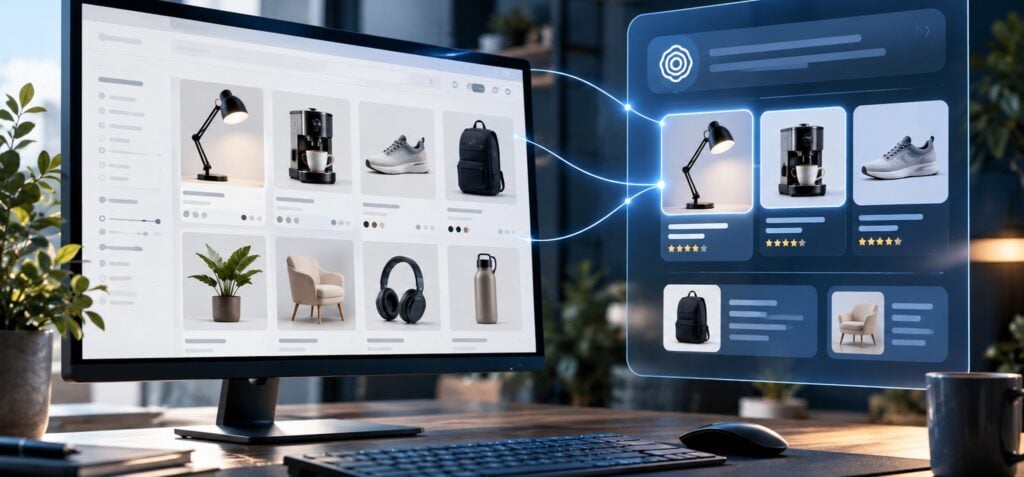
An online store can be easy to find on Google and still be missing when someone asks an AI assistant for product recommendations. A shopper might want a compact coffee machine for a small kitchen, running shoes for wet weather, or skincare that fits a particular routine. The answer may mention several brands and describe why each one is relevant. For a retailer, the important question is whether the product information behind those recommendations is complete, accurate, and easy to understand.
GEO agencies work on how brands and products are represented in AI-generated answers. Ecommerce adds another layer: prices change, products sell out, colour and size options vary, and a store might have thousands of listings. An agency that is comfortable with editorial content alone may not be the right partner for a large product catalogue.
The agencies bring different strengths. Online Performance focuses on AI-search visibility, while Exactive Marketing connects GEO with other digital marketing services. Charle and 1Digital Agency have experience with ecommerce platforms, and Coalition Technologies brings a technical SEO background. The right choice depends on how the store is built and where it needs support.
Begin with the products customers compare
Shopping questions offer a useful starting point for ecommerce GEO. Someone looking for a travel backpack for a weekend flight may compare dimensions, capacity, materials, and airline size limits. A customer choosing an espresso machine may care about cleaning, counter space, and the accessories included. These details show the kind of information shoppers need before they choose a product.
The first step is to choose a few important product categories and collect the questions that repeatedly come up in reviews, customer service conversations, and product comparisons. Then check which details customers can find on the website and whether those details are consistent across category pages, individual listings, and other places where the brand appears.
A clearer specification table or a short buying guide can help customers compare products. For stores with hundreds of sizes, colours, and configurations, improving product data across the catalogue may have a greater impact than publishing another blog post.
GEO Agencies for Ecommerce Brands
Online Performance – AI visibility and brand information
Online Performance offers GEO services covering AI visibility reviews, content improvements, brand information, citations from external sources, and ongoing monitoring. The service is not limited to a particular ecommerce platform. It is more relevant when a store wants to understand how its brand and products are discussed in AI answers and decide which information needs attention.
For a retailer with several product lines, that could involve checking how AI assistants respond to shopping requests in a few priority categories. A homeware brand might discover that its products are mentioned for style but not for practical needs such as washable fabrics or smaller spaces. The brand can then examine whether its published information provides the details shoppers are asking for.
An initial project could focus on two product categories and the shopping questions customers ask about them. Online Performance can review the brand and product descriptions that appear online and identify which content needs attention. The retailer supplies current pricing, availability, and specifications from its own systems.
Exactive Marketing – GEO connected to ecommerce marketing
Exactive Marketing provides GEO alongside SEO, content, technical optimization, and other digital marketing services. Its GEO offering covers AI visibility, the way a brand is described online, structured content, and related website improvements.
Retailers updating category pages, preparing seasonal campaigns, or launching a new range often work across several channels at once. A product may appear in an advert, a category page, and a comparison guide. Consistent names and descriptions make it easier for shoppers to recognise the same product wherever they encounter it.
A beauty retailer launching a new collection, for example, may publish product pages, a category guide, and helpful information about choosing between items. Exactive Marketing can connect improvements to AI-search visibility with the content work already planned for that launch. The proposal should make clear which changes belong to GEO and which are part of the store’s wider marketing activity.
For ecommerce retailers running several campaigns at once, Exactive Marketing offers the option of coordinating GEO with established marketing work. Clear reporting can show changes in AI mentions alongside website visits and purchases, with paid advertising results reported separately.
Charle – Shopify stores and product data
Charle specializes in Shopify ecommerce and offers AI SEO services built around the structure of Shopify stores. Its work covers product and collection pages, structured data, product feeds, navigation, and AI-search monitoring. Unlike a general content agency, it explicitly addresses the technical details of Shopify and Shopify Plus.
Product variants are a good example of where platform expertise counts. A clothing brand may offer the same item in several colours and sizes, while a furniture retailer needs to display dimensions and materials clearly. These details should be consistent across product pages and the catalogue data the store uses.
Charle works on Shopify collection structure, product descriptions, schema markup, and product feeds. This covers the information shoppers see and the data Shopify uses to describe each item. Stores planning a category redesign can address both parts of the experience together.
Charle is particularly relevant to Shopify and Shopify Plus retailers. Businesses using WooCommerce, Magento, or a custom storefront should ask about support for their platform before planning a project. For Shopify stores preparing a rebuild or a major category update, its platform experience is a clear point of difference.
1Digital Agency – product pages and ecommerce platforms
1Digital Agency combines GEO with ecommerce SEO, content, web development, and platform support. Its services address structured data, page organization, product and category content, and AI-search visibility. The agency also works with stores using Shopify, BigCommerce, WooCommerce, and Magento.
In a large catalogue, the design of a product-page template can affect hundreds of listings. A shared template should have space for the details that matter in each category, such as materials, compatibility, sizes, and common uses. Reviewing the template alongside a few real products helps identify changes that can be applied consistently across the store.
1Digital Agency includes product-related schema, shopping-focused content, and accessibility for search crawlers in its GEO offering. Accurate structured data gives search systems a more consistent description of a product’s attributes. It supports how those details are interpreted, although recommendations in AI answers still depend on the platform and the shopper’s question.
1Digital Agency may suit retailers who need work on both their ecommerce platform and AI-search visibility. A proposal should identify which changes the agency will make in the store itself and which ones need help from developers or product managers. That makes responsibilities clear before work begins.
Coalition Technologies – technical SEO for large online stores
Coalition Technologies has a long-standing ecommerce SEO and development background and publishes guidance on technical AI-search optimization. Its material covers page structure, internal links, structured information, and keeping commercial details such as offers and availability accurate.
As online stores grow, they often add categories, filters, seasonal ranges, and campaign pages. A review of the catalogue can help identify pages with overlapping content, products that take too many clicks to reach, and older information that needs updating after a range changes.
Coalition Technologies brings technical ecommerce experience to this kind of work. A project may focus on category navigation, internal linking, structured data, and keeping product information consistent. Clearer site organisation helps both shoppers and search systems find the right pages.
Coalition Technologies has a strong background in ecommerce SEO and development. Retailers interested in its AI-search work should ask for a specific GEO scope alongside the technical SEO plan. Seeing the deliverables for each area makes the proposal easier to assess.
Ecommerce GEO services at a glance
The table groups the agencies by the kind of ecommerce work they are suited to discuss, from AI-search visibility to Shopify product feeds and larger catalogue improvements. It can help narrow the shortlist before requesting proposals.
| Store priority | Agency to consider | Relevant capability |
|---|---|---|
| AI answers and product-brand mentions | Online Performance | GEO audits, content and citation monitoring |
| GEO alongside ongoing marketing | Exactive Marketing | GEO, SEO, content and cross-channel coordination |
| Shopify product and collection structure | Charle | Shopify AI SEO, feeds, schema and collection pages |
| Multi-platform ecommerce improvements | 1Digital Agency | GEO with ecommerce SEO and development |
| Complex catalogue and technical issues | Coalition Technologies | Technical ecommerce SEO and AI-search guidance |
What an ecommerce GEO proposal should cover
A useful agency brief can start with a category page, two typical product listings, and one shopping question customers often ask. These examples show how the store presents product information today. They also give agencies something specific to review, so their recommendations can be compared on the same basis.
Product pages and category pages
Product pages explain individual items, while category pages help shoppers compare a range of options. A useful agency proposal should cover both: accurate details for each product and a category structure that helps people narrow their choices. Shared page templates can make those improvements consistent across the catalogue.
A useful review checks practical details such as fit, size, material, compatibility, and return terms where relevant. It may also look at whether category filters and navigation help customers narrow a choice. These improvements support customers directly, even when a product is never mentioned in an AI answer.
Product data, pricing and availability
Ecommerce information changes quickly. Some products are discontinued, others have several variants, and offers may run only for a limited period. A proposal should show how the agency will handle the difference between permanent product descriptions and changing commercial information.
The store’s own systems remain the source for prices, stock levels, and product specifications. Where the project includes feeds or structured data, the agency should explain how updates will flow from those systems to the website. This helps keep the information customers see aligned with the current catalogue.
Reviews, comparisons and independent sources
Product reviews and independent buying guides can influence which brands customers explore. An ecommerce GEO agency can review whether those sources describe the retailer’s products accurately and whether the website provides the details readers need to check. Genuine reviews and clearly identified sponsored content help maintain trust.
Useful product comparisons also explain differences between options. A lightweight suitcase may be easier to carry and have less storage space. A compact blender may fit a small kitchen and make smaller portions. Specific details help people select the product that fits their needs.
GEO for Ecommerce: A Practical Example
Imagine an online retailer selling desk lamps. Its category includes small lamps for bedside tables, adjustable models for home offices, and decorative designs for living rooms. The business wants to appear when shoppers ask AI tools to recommend a lamp for a small desk.
Start with the existing lamp listings. Check whether they show dimensions, adjustable features, brightness, power requirements, and clear photos. The category page should make it easy to compare compact models, while product names should help shoppers understand what sets each option apart.
An AI-visibility specialist can check which desk lamps appear in relevant answers and what information those answers use. A Shopify specialist can examine the product feed, variants, and collection structure. A technical ecommerce agency can review navigation and structured data. Those are different routes to improving the same shopping experience.
The retailer can choose a few changes and see how customers respond. It can track whether shoppers find relevant products more easily and, separately, whether the store appears in more AI-generated recommendations for the questions being reviewed. Sales and revenue figures can then be considered alongside those results, with their own context.