
Selling on Amazon can feel pretty straightforward in the beginning, but it doesn’t stay that way for long. Once the orders pile up or your ad spend starts creeping higher than you expected, you suddenly realise you’re missing a clearer picture of what’s going on. And that’s usually the moment people start searching for tools that actually make their routine easier instead of more chaotic.
This guide pulls together a handful of Amazon marketing tools that genuinely help you navigate the day to day – the messy bits included. No buzzwords, no dramatic promises. Just a grounded look at what these platforms do, how they clean up your data, and where they quietly save you time. Whether you’re managing a small catalog or juggling several brands, the point is simple: help you figure out which tools are actually worth keeping in your workflow.
1. WisePPC
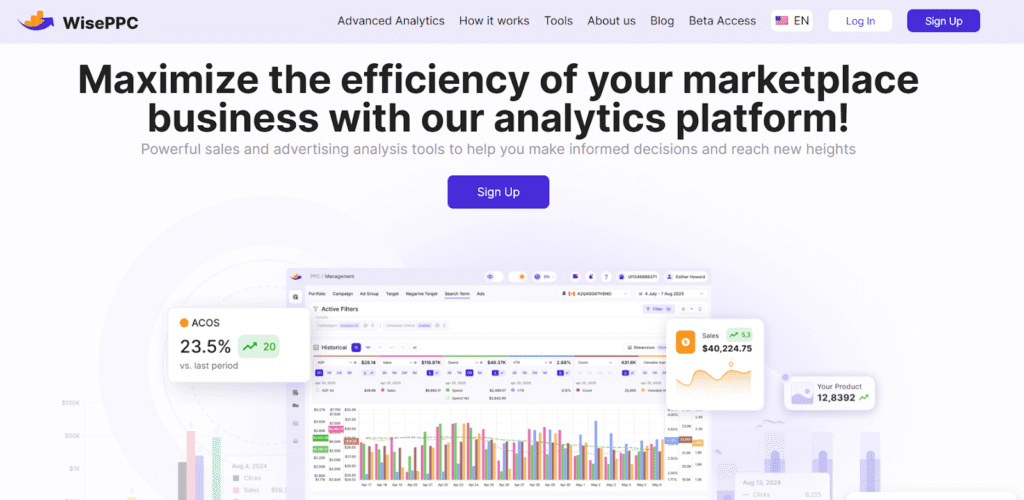
WisePPC is an Amazon marketing tool for sellers who want a clearer view of how their ads and overall marketplace activity are actually performing. Instead of jumping between spreadsheets or separate dashboards, the platform brings analytics, real-time metrics, and bulk editing tools into one place. Sellers can look at long-term trends, filter data down to very specific segments, and make changes without switching screens. WisePPC also supports deeper analysis, like comparing placements, tracking performance across multiple accounts, or reviewing years of historical data that Amazon normally overwrites. It’s built for teams that want more control over their PPC setup but also want the process to feel simpler and more connected.
Key Highlights:
- Unified analytics that combine sales, ads, and organic performance
- Bulk actions for editing campaigns, bids, and targets at scale
- Advanced filtering for detailed performance analysis
- Historical data stored for years instead of Amazon’s short retention window
- Inline editing for quick adjustments without extra navigation
- Placement-level analysis to refine bidding strategies
- Metric highlighting to spot unusual performance patterns fast
Good Choice For:
- Sellers who want deeper visibility into their Amazon advertising activity
- Teams managing many campaigns or multiple accounts
- Users who rely heavily on data for strategy decisions
- Sellers looking for a more flexible and analytical PPC environment
Contacts:
- Website: wiseppc.com
- Facebook: www.facebook.com/people/Wise-PPC/61573154427547
- LinkedIn: www.linkedin.com/company/wiseppc
- Instagram: www.instagram.com/wiseppc
2. Keepa
Keepa gives sellers a straightforward way to look at how products behave over time. Instead of checking a listing and guessing whether the price is steady or jumping around, they can pull up long-running charts and see the bigger picture. The extension and mobile apps make it easy to check this information while browsing or doing quick research, so it fits naturally into a seller’s routine. It’s mostly about understanding patterns rather than chasing short-term changes, which can help calm some of the guesswork that comes with sourcing.
Key Highlights:
- Tracks long-term price and product behavior on Amazon
- Works through a browser extension and mobile apps
- Available on Google Play and the Apple App Store
- Extra features unlocked with a subscription
Good Choice For:
- Sellers who want a clearer sense of how stable or unpredictable a product has been
- People checking items before adding them to their catalog
- Anyone comparing competing listings without digging through scattered data
3. Jungle Scout
Jungle Scout brings together a wide set of tools that help sellers understand what’s happening across Amazon, whether they’re running a small shop or managing a larger brand. They focus a lot on market research, brand visibility, and how campaigns perform, so users can see where they stand and where there might be room to adjust. Their platform is split into solutions that fit different types of teams, but the general idea stays pretty practical: make Amazon activity easier to interpret and a bit less overwhelming.
Key Highlights:
- Covers market research, brand tracking, and campaign insights
- Built for both smaller sellers and established brands
- Includes a browser extension and product research tools
- Offers options for structured reporting and consulting
Good Choice For:
- Sellers who need a broader view of how their products compete in the market
- Teams thinking about new product directions or category shifts
- Agencies or brands juggling multiple accounts or product lines
4. Helium 10
Helium 10 brings together tools that help sellers with product research, keywords, listing work, and general account management. They also support marketplaces beyond Amazon, which is helpful if someone wants to test Walmart or TikTok Shop without switching platforms. Their Chrome extension makes quick checks simple while browsing, and the rest of the tools fit into everyday tasks like building listings, tracking performance, or sorting out advertising. It’s meant to be an all-in-one setup for sellers who prefer keeping things in one place.
Key Highlights:
- Tools for product and keyword research, supported by a Chrome extension
- Features for listing creation and refinement
- Advertising and automation options
- Support for Amazon, Walmart, and TikTok Shop
Good Choice For:
- Sellers exploring new product ideas or improving existing listings
- People who prefer managing most tasks from a single platform
- Users branching out beyond Amazon into other marketplaces
5. SellerApp
SellerApp offers a set of tools that help sellers follow their Amazon activity from different angles, bringing ads, product insights, and performance tracking into one place. Their platform focuses on showing how various parts of a seller’s workflow connect, whether someone is reviewing their campaigns, looking at product trends, or checking how their sales affect profitability. They also provide options for teams that handle multiple accounts or need more structured reporting, so the system adapts to different levels of complexity without forcing a single way of working.
Key Highlights:
- Unified dashboard for tracking performance across marketplaces
- Tools for ad automation and rule-based adjustments
- Customizable reporting options for teams and clients
- Product Intelligence features for reviewing ASIN history and listing quality
Good Choice For:
- Sellers who want one place to review ads, products, and general performance
- Teams handling multiple accounts or brands
- Users interested in a mix of automation and manual control
- Sellers who need clearer reporting for clients or internal teams
6. Perpetua
Perpetua provides software that helps sellers manage their advertising across Amazon and other marketplaces by automating much of the setup and optimization work. Instead of building every campaign manually, users can set overall goals and let the system handle the smaller adjustments. The platform also includes tools for monitoring how ads perform across different formats, like search, display, and video, along with reporting features that give sellers a broader view of how their budget is being used.
Key Highlights:
- Automation engine for creating and optimizing ad campaigns
- Support for Amazon, Walmart, and other major marketplaces
- Reporting tools that show how ads perform across formats
- Recommendations and bidding adjustments that respond to context
Good Choice For:
- Sellers who prefer automated ad execution instead of building everything manually
- Teams that run ads across several marketplaces
- Users who want clearer visibility into how campaigns influence performance
- Sellers managing higher ad volumes or multiple product lines
7. Quartile
Quartile offers a platform that helps sellers run and refine retail media campaigns across major marketplaces. They organize advertising around individual products, breaking campaigns into detailed structures that make it easier to see what works and where budgets should shift. Their system brings in signals from different channels, turning them into insights that guide bidding and broader strategy. Quartile also pairs their software with hands-on support, which can be useful for sellers who want an extra layer of guidance as they scale.
Key Highlights:
- Granular, per-ASIN campaign structure for detailed advertising control
- Automated bidding based on real-time signals
- Reporting that covers both performance and category insights
- Access to a support team for ongoing strategy work
Good Choice For:
- Sellers who want a structured and detailed approach to advertising
- Brands running campaigns across multiple channels or marketplaces
- Users looking for both software and strategic input
8. Sellozo
Sellozo gives sellers a way to manage Amazon PPC without feeling buried under settings and constant bid changes. Their tools lean on automation to take care of the repetitive parts, while the visual Campaign Studio helps you sketch out how everything should work. The platform is built for people who want to stay in control but not spend every day tweaking keywords. And for sellers who’d rather hand things off, there’s a managed option where their team steps in and handles most of the heavy lifting.
Key Highlights:
- Automation that handles day to day bidding and campaign adjustments
- Visual Campaign Studio for mapping out strategies more easily
- Managed PPC service available when hands-on help is needed
- Flat-fee setup without long contract pressure
- Tools that help organize keywords and shape campaign structure
Good Choice For:
- Sellers who want PPC work to feel less overwhelming
- People who prefer visual tools when planning campaigns
- Users looking for automation that still leaves room for direction
- Sellers who might benefit from outside support on PPC tasks
9. Teikametrics
Teikametrics offers an AI-driven system for handling advertising across Amazon, Walmart, TikTok, and a few other marketplaces. Instead of adjusting bids by hand, sellers can rely on the platform’s predictive models, which look at different signals and try to set smarter bids automatically. It’s basically a way to keep campaigns moving without constantly checking spreadsheets. The platform also brings together performance reports, making it easier to spot shifts and figure out what’s worth paying attention to.
Key Highlights:
- Predictive AI that adjusts keyword and target bids automatically
- Works across multiple marketplaces in one place
- Reporting tools to track progress and monitor performance
- Ability to set goals and constraints that shape bidding behavior
- Real-time adjustments handled by the platform’s automation
Good Choice For:
- Sellers tired of manually tuning bids across dozens of campaigns
- Teams advertising on more than one marketplace
- Users who want analytics and ad management under one roof
- Sellers trying to save time while still keeping a sense of control
10. DataHawk
DataHawk pulls marketplace data from Amazon, Walmart, and other channels into one platform, which makes it easier for teams to see what’s happening without juggling multiple dashboards. The tool sends alerts, highlights trends, and uses AI to point out things you might miss when the volume gets too big to track manually. For teams that already work with their own BI tools, DataHawk can plug into those systems too, so the data doesn’t feel locked in or hard to reuse.
Key Highlights:
- Central hub for analytics across different marketplaces
- Dashboards and alerts designed for everyday monitoring
- AI tools that help flag issues, opportunities, and potential next steps
- Integrations with external BI and analytics tools
- Flexible data access for teams that build their own reports
Good Choice For:
- Sellers who want a single place to check performance across channels
- Teams that rely heavily on analytics to guide decisions
- Agencies or enterprises managing multiple brands
- Users who need flexible data handling for custom workflows
11. Ad Badger
Ad Badger focuses on helping sellers manage Amazon PPC without needing deep advertising knowledge. Their platform handles a lot of the repetitive work, like adjusting bids and scanning for weak keywords, so sellers can keep campaigns running without constant micromanagement. The toolset brings together bidding, keyword cleanup, and simple monitoring features, which makes it easier to stay organized and avoid wasting spend. It’s built for sellers who want support in managing ads but still want to understand what’s going on inside their campaigns.
Key Highlights:
- Automated bidding that adjusts daily based on conversion behavior
- Negative keyword tool that removes underperforming terms
- Keyword and campaign tools designed for simpler PPC management
- Platform monitors campaigns continuously and makes small adjustments
- Includes access to educational resources for sellers learning PPC
Good Choice For:
- Sellers who want PPC help without needing advanced advertising skills
- Users trying to cut wasted ad spend and tighten their keyword lists
- People who prefer automation but still want visibility into their campaigns
- Sellers who appreciate having both software and educational guidance
12. Viral Launch
Viral Launch offers a collection of tools that help sellers research products, keep an eye on competition, and manage their Amazon listings. Their platform brings together product discovery, keyword tools, listing builders, and PPC automation in one place, which makes it easier for sellers to move between research and day to day operations. Instead of switching between separate services, users can explore markets, update listings, and track how their products are doing without breaking their workflow.
Key Highlights:
- Tools for product research, competition tracking, and market insights
- Keyword research and listing-building features in one platform
- PPC automation available through AdSprout
- Centralized dashboard for managing multiple parts of the Amazon workflow
Good Choice For:
- Sellers who want research and operational tools under one roof
- People exploring new product ideas or checking competitive trends
- Users managing listings and ads in the same workspace
- Sellers who like having extra optional services when needed
13. Sellerboard
Sellerboard provides a profit-focused dashboard that helps sellers understand how their Amazon business performs across sales, costs, and advertising. Instead of guessing margins or digging through scattered reports, users can see their profit breakdown in real time and track how each product is doing. On top of the analytics, sellerboard includes tools for PPC optimization, inventory planning, review requests, and detecting listing changes, making it a practical option for sellers who want everything tied back to profitability.
Key Highlights:
- Real-time profit dashboard with detailed cost and fee tracking
- Inventory management and alerts for low stock
- PPC analytics and automated bid optimization options
- Tools for requesting reviews and monitoring listing changes
- Supports refunds for lost or damaged FBA inventory
Good Choice For:
- Sellers who want clearer visibility into their true profit
- Users who prefer tying PPC decisions to actual financial impact
- Teams that manage inventory and ads together
- Sellers who need alerts for listing updates, returns, or account changes
14. MerchantWords
MerchantWords gives sellers a way to explore how shoppers search on Amazon by pulling together keyword data, trends, and competitive insights. Instead of guessing what people type into the search bar, sellers can dig into real terms, see what competitors rank for, and spot new niches that might be worth testing. The platform also includes tools for tracking keyword lists, checking page one results, and reviewing broader market patterns, so it ends up being a workspace where you can slowly piece together what demand actually looks like.
Key Highlights:
- Tools for finding and tracking Amazon shopper keywords
- Trend features that show new searches and emerging product interest
- Reverse ASIN lookup to review competitor ranking terms
- Digital Shelf insights for understanding how products compete
- Collections for organizing keyword lists and ongoing research
Good Choice For:
- Sellers researching new product ideas or market gaps
- Users who rely heavily on keyword visibility to guide decisions
- People comparing competitor rankings and search behavior
- Sellers building or refining listings based on search intent
15. Nozzle
Nozzle focuses on helping sellers understand their customers more deeply rather than looking only at single orders or ad metrics. Their platform breaks down things like customer lifetime value, repeat purchase behavior, and acquisition costs, which gives sellers a clearer sense of which products bring in long-term buyers. It also highlights retention patterns and purchase intervals, helping teams figure out when customers tend to return and what products connect well with each other. The goal is to make Amazon performance feel less like isolated numbers and more like something tied to real customer behavior.
Key Highlights:
- Customer lifetime value insights across products and timeframes
- Tools for reviewing acquisition costs and ad efficiency
- Cohort and purchase-interval reporting
- Managed service option for teams that want extra analytical support
Good Choice For:
- Sellers who want to move beyond surface-level ad metrics
- Users exploring which products drive follow-up purchases
- Sellers trying to shape a more strategic advertising approach
16. Scale Insights
Scale Insights is built for sellers who want highly customizable PPC automation and prefer having fine-grained control over how their rules run. Instead of relying on one-size-fits-all automation, the platform lets users stack conditions, build workflows, and shape traffic based on very specific performance patterns. It’s the kind of system that appeals to sellers who already have a sense of how they want campaigns to behave but need a tool that can execute those ideas at scale. Transparency is a big part of it too, since every calculation and scheduled change can be previewed and reviewed.
Key Highlights:
- Detailed rule-based automation with layered conditions
- Control over keywords, bids, and campaign behavior at a granular level
- Tools to preview algorithm decisions before they run
- Insights into ads, sales patterns, and traffic behavior
Good Choice For:
- Sellers who want deep control over PPC automations
- Users managing large campaign structures or many ASINs
- Teams comfortable building their own bidding and workflow rules
- Sellers looking for transparency in how automation makes decisions
17. BidX
BidX gives sellers a place to manage and automate their marketplace advertising without digging through multiple dashboards. Their platform handles campaign creation, adjusts bids, and offers ways to run both search and display ads, so sellers can keep everything organized while still nudging performance in the right direction. It also integrates insights from tools like Amazon Marketing Cloud, which helps users understand how shoppers move from awareness to purchase. BidX works for both hands-on users who want to tweak things themselves and those who prefer a team to manage the setup.
Key Highlights:
- Automates keyword, bid, and budget adjustments for Amazon and Walmart ads
- Supports search, display, and video ad formats
- Uses audience and analytics tools to map parts of the customer journey
- Options for self-service or managed campaign support
- Integrates external traffic sources like Google, TikTok, and Facebook
Good Choice For:
- Sellers who want to automate large parts of their PPC routine
- Users who run ads across Amazon and Walmart
- Teams interested in fuller funnel visibility, not just search ads
18. Seller Labs Ad Genius
Seller Labs Ad Genius helps sellers automate everyday Amazon PPC decisions so they’re not constantly adjusting bids or reviewing keywords. The system analyzes campaigns, suggests changes, and lets users approve updates manually or set up rules to handle everything automatically. The setup process is kept simple, which makes it easier for people who don’t want to spend hours configuring campaigns. A refreshed dashboard gives a clearer view of performance trends, so sellers can quickly see what’s improving and what might need more attention.
Key Highlights:
- Automated bid adjustments and suggestion-based optimizations
- Simple onboarding process with quick setup
- Dashboard that highlights performance, ROAS, and keyword behavior
- Manual approval or automated approval based on confidence scores
- No required ad spend minimums to start using the platform
Good Choice For:
- Sellers who want PPC automation without a steep learning curve
- Users who prefer reviewing suggestions before applying changes
- People who want a cleaner view of how their ads are performing
- Sellers trying to save time without giving up control completely
19. Aura
Aura focuses on repricing, giving Amazon and Walmart sellers a way to adjust prices automatically based on real-time market shifts. Instead of checking listings throughout the day, sellers can rely on Aura’s AI to keep prices competitive while still respecting their profit ranges. The tool shows logs of every price change, supports bulk uploads, and connects with other systems to pull in costs or product details. It’s a straightforward option for sellers who want pricing handled in the background so they can spend more time on sourcing or other daily work.
Key Highlights:
- AI repricing that reacts instantly to market changes
- Supports automated rules and workflows for listing management
- Price change history available for clarity and review
- Bulk updates via Excel or Google Sheets
- Integrations for pulling cost data from external tools
Good Choice For:
- Sellers who want hands-off, real-time repricing
- Users looking to maintain margins while staying competitive
- Teams managing a large number of active listings
- Sellers who prefer having full visibility into why prices change
Final Word
With so many Amazon marketing tools available in 2026, the challenge isn’t finding options but figuring out which ones actually make your daily work easier. Each tool covers a different piece of the puzzle: keywords, ads, pricing, analytics, and the right mix depends on what you need most. Smaller teams might rely on simple automation, while larger brands often benefit from deeper reporting and long-term data.
What matters is choosing tools that cut down guesswork and help you respond faster to changes in the marketplace. If a platform gives you clearer insights and saves you time, it’s usually worth keeping in your workflow. Pick the tools that match your current goals, and you’ll have a solid foundation to grow through 2026 and beyond.