
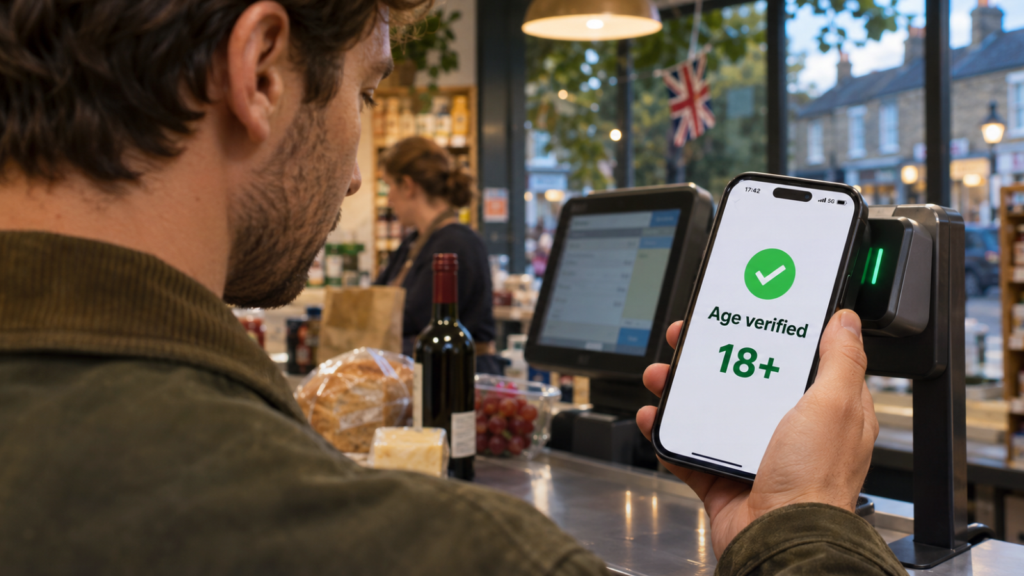
Age verification is becoming an essential part of digital services, from online gaming and social media to age-restricted retail and entertainment. As regulations evolve and businesses face growing pressure to protect minors, choosing the right age verification software is increasingly important.
However, not all age verification solutions work the same way. Some estimate a user’s age from a selfie, while others verify the date of birth using a government-issued identity document. More advanced platforms combine these methods with biometric verification and fraud detection.
To help businesses find the right solution, we’ve compared eight best age verification software providers: Regula, FaceTec, Incode, Yoti, Jumio, Entrust, Identomat, and iDenfy.
The comparison focuses on verification methods, security capabilities, deployment options, and the use cases each provider is best suited for.
Age Verification vs. Age Estimation: What’s the Difference?
Before comparing providers, it’s important to understand the two main approaches to age assurance.
Age verification uses reliable evidence, typically a government-issued identity document, to confirm a person’s age or date of birth. This approach provides stronger assurance when businesses must establish that someone meets a legal age requirement.
Age estimation uses biometric analysis, usually a selfie or short video, to predict a person’s approximate age. It can reduce friction because users don’t need to upload an identity document, but it doesn’t confirm their exact date of birth or legal identity.
Many businesses combine these methods through step-up verification. For example, a platform might start with facial age estimation and request an identity document only when the result is uncertain or the risk is higher.
The best approach depends on regulatory requirements, fraud risks, privacy considerations, and the customer experience.
Best Age Verification Software: Quick Comparison
| Provider | Main age assurance methods | Deployment | Best suited for |
| Regula | Age estimation, document verification, biometrics | On-premises, private cloud | High-assurance age verification and flexible workflows |
| FaceTec | Biometric age estimation | On-premises, private cloud | Face-based age checks and biometric security |
| Incode | Age estimation, document verification | Cloud | Low-friction, selfie-based age checks |
| Yoti | Age estimation, Digital ID, reusable age credentials | Cloud | Privacy-focused age assurance |
| Jumio | Document verification, age estimation | Cloud | Regulated onboarding and age-restricted access |
| Entrust | Document-based age verification | Cloud, on-premises | Enterprise identity verification workflows |
| Identomat | Document verification, age estimation | Cloud, private cloud, on-premises | Straightforward ID-based age checks |
| iDenfy | Age estimation, document verification | Cloud | Configurable age checks for consumer services |
Source: Publicly available vendor product information. Capabilities and deployment options may vary by product and implementation.
Although these providers address similar business needs, they differ in how they establish age, handle biometric data, and integrate verification into digital customer journeys.
1. Regula: Best for High-Assurance Age Verification
Regula combines biometric age estimation with document authentication and identity verification technologies. Its approach allows businesses to choose the level of assurance required for different age-restricted services.
For lower-risk scenarios, organizations can use facial age estimation without requiring an identity document. When stronger evidence is necessary, they can verify the date of birth from an official ID and add face matching and liveness detection to confirm that the document belongs to the person presenting it.
These checks can be combined into configurable workflows within the Regula IDV Platform, allowing businesses to apply different age thresholds and verification requirements across markets.
Regula also analyzes document authenticity and can compare the estimated age of a person in a document portrait with the stated date of birth and document issue date to identify potential inconsistencies.
Key capabilities:
- Facial age estimation and document-based age verification.
- Face matching, liveness detection, and document authentication.
- Configurable age thresholds and step-up verification workflows.
- Support for more than 16,000 identity document templates from 254 countries and territories.
- Private cloud and on-premises deployment options.
Best for: Banks, gaming platforms, digital services, and enterprises that require high-assurance age verification, fraud prevention, and control over sensitive identity data.
2. FaceTec: Best for Biometric Age Estimation
FaceTec specializes in biometric verification technology rather than offering a complete identity verification platform.
Its age estimation capabilities are based on 3D FaceMap technology, which captures facial information during a liveness detection session.
The same biometric capture can support age estimation, face matching, and presentation attack detection without requiring users to submit an identity document by default.
This makes FaceTec relevant for businesses that prioritize biometric security and want to minimize document collection.
However, organizations requiring document-based age verification, regulatory workflows, or additional identity checks may need to integrate FaceTec with other technologies.
Key capabilities:
- Facial age estimation using 3D FaceMap technology.
- 3D liveness detection and biometric face matching.
- Anti-spoofing capabilities.
- SDKs for web, iOS, and Android applications.
Best for: Digital platforms and technology providers that need specialized biometric age estimation and liveness detection.
3. Incode: Best for Low-Friction Age Verification
Incode focuses on reducing friction in age assurance by allowing businesses to begin with less intrusive verification methods.
Its platform supports facial age estimation, document verification, and date-of-birth checks against available data sources.
For straightforward age checks, users can complete facial age estimation without uploading an identity document. When additional assurance is needed, businesses can request document verification, validate the date of birth, and compare the document portrait with a selfie.
Incode also offers on-device facial age estimation, allowing certain biometric checks to run locally rather than transmitting all biometric data for remote processing.
Key capabilities:
- Selfie-based facial age estimation.
- Document-based age verification and date-of-birth validation.
- Face matching and liveness detection.
- On-device age estimation.
- Dynamic verification workflows.
Best for: Consumer-facing digital businesses that prioritize fast, convenient age checks and want to minimize unnecessary identity document collection.
4. Yoti: Best for Privacy-Focused Age Assurance
Yoti offers age assurance solutions designed to help businesses establish whether users meet an age threshold without necessarily collecting their full identity information.
Its facial age estimation technology allows users to demonstrate that they are likely above a required age without uploading a government-issued ID.
For scenarios requiring additional evidence, Yoti also supports document verification, Digital ID, and reusable age credentials.
Reusable proof-of-age options allow users to complete an age check and share the resulting age confirmation with supported services, reducing the need to repeatedly provide sensitive personal information.
Key capabilities:
- Facial age estimation without identity document upload.
- Document-based age verification.
- Digital ID and reusable proof-of-age credentials.
- Liveness detection and anti-spoofing checks.
- Configurable verification workflows.
Best for: Social media platforms, online communities, age-restricted websites, and digital retailers seeking privacy-conscious age assurance.
5. Jumio: Best for Age Verification in Regulated Industries
Jumio combines identity document verification with biometric checks to help businesses establish users’ ages and identities.
Its document-based age verification process extracts the date of birth from a government-issued ID, checks the document, and compares its portrait with a selfie.
Liveness detection provides additional assurance that the person completing verification is physically present.
Jumio also supports facial age estimation as an initial check. When the estimated age falls near a required threshold, the business can request stronger evidence through document verification.
For returning customers, Jumio offers authentication capabilities that can compare a new selfie with an existing identity record.
Key capabilities:
- Document-based age verification and date-of-birth extraction.
- Facial age estimation.
- Face matching and liveness detection.
- Step-up verification based on risk and age thresholds.
- Support for more than 5,000 identity document types.
Best for: Financial services, gaming businesses, and regulated digital platforms that need document-based age verification and ongoing identity assurance.
6. Entrust: Best for Enterprise Age Verification Workflows
Entrust provides age verification as part of its broader identity verification and security offering.
Its solution combines document verification, date-of-birth extraction, facial biometrics, and checks against trusted data sources.
A key feature is Workflow Studio, which allows organizations to configure verification processes for different products, markets, and risk levels.
For example, a business might use a document-based age check for one service while requiring additional biometric verification for a higher-risk transaction.
This flexibility is useful for enterprises managing multiple age-restricted customer journeys.
Key capabilities:
- Identity document verification and date-of-birth extraction.
- Facial biometrics and liveness detection.
- Trusted data-source checks.
- No-code workflow configuration.
- Support for more than 2,500 identity document types.
Best for: Large enterprises that need configurable age verification processes integrated with broader identity and security workflows.
7. Identomat: Best for Straightforward Document-Based Age Verification
Identomat focuses on practical age verification workflows built around government-issued identity documents.
Its solution extracts and validates the date of birth from an identity document to determine whether a user meets the required age threshold.
Businesses can configure minimum-age requirements for different products, regions, or risk levels.
When stronger assurance is needed, the verification process can include document authenticity checks and liveness detection.
This makes Identomat an option for organizations that need reliable age decisions without implementing highly complex verification workflows.
Key capabilities:
- Document-based age verification.
- Date-of-birth extraction and validation.
- Document authenticity checks.
- Optional liveness detection.
- Configurable age thresholds and API integration.
Best for: Businesses seeking straightforward, document-based age verification for onboarding, age-restricted access, or online transactions.
8. iDenfy: Best for Configurable Age Checks
iDenfy provides identity and age verification tools designed for businesses that need to introduce age checks into existing digital services.
Its platform supports facial age estimation and document-based verification, with configurable age limits that can be managed through a dashboard or API.
Businesses can combine document checks, face matching, and liveness detection to determine whether users meet the required age threshold.
Integration options include APIs, SDKs, iFrames, plugins, and direct verification links, making it possible to add age assurance to different customer journeys.
Key capabilities:
- Facial age estimation and document-based age verification.
- Configurable minimum-age rules.
- Face matching and liveness detection.
- API, SDK, iFrame, and plugin integrations.
- Verification workflows for age-restricted services.
Best for: Online gaming, dating platforms, digital marketplaces, and other consumer-facing businesses that need configurable age verification.
How to Choose the Best Age Verification Software
The best age verification solution depends on the level of assurance your business needs and how much friction users can tolerate.
When comparing providers, focus on four factors.
1. Age Verification Methods
Determine whether your business needs to estimate a user’s age or verify their date of birth using official evidence.
Facial age estimation may be appropriate for lower-risk scenarios, while document-based verification provides stronger evidence when regulatory requirements or fraud risks demand it.
Solutions that support both methods allow businesses to request additional proof only when necessary.
2. Biometric Security and Fraud Prevention
If your age verification process relies on selfies or identity documents, evaluate how the provider protects against impersonation and manipulated evidence.
Face matching, liveness detection, document authentication, and protection against biometric injection attacks can all contribute to stronger verification.
The appropriate combination depends on the risks associated with the service.
3. Privacy and Data Protection
Age assurance often involves sensitive personal information, including facial images and identity documents.
Businesses should assess what data is collected, where it is processed, how long it is retained, and whether the solution can confirm an age threshold without unnecessarily revealing a user’s identity.
Deployment options may also matter for organizations with strict data residency or security requirements.
4. Workflow Flexibility and Integration
Age verification requirements can vary by country, industry, and service.
Look for software that supports configurable age thresholds, step-up verification, and integration with existing applications.
The ability to adapt verification workflows can help businesses respond to changing regulations without rebuilding their age assurance systems.
Choosing the Right Age Verification Provider
There is no universal best age verification software. The right choice depends on whether your business prioritizes convenience, stronger proof of age, privacy, or integration flexibility.
Regula is suited to high-assurance age verification that combines document authentication and biometric checks. FaceTec specializes in biometric age estimation, while Incode focuses on low-friction verification journeys.
Yoti emphasizes privacy-focused age assurance and reusable credentials. Jumio and Entrust offer age verification within broader identity verification platforms, while Identomat and iDenfy provide options for configurable age checks.
Before selecting a provider, businesses should test shortlisted solutions against their actual age thresholds, customer demographics, fraud risks, and regulatory obligations.
The goal is not simply to verify age, but to establish sufficient confidence while minimizing unnecessary data collection and friction for legitimate users.