
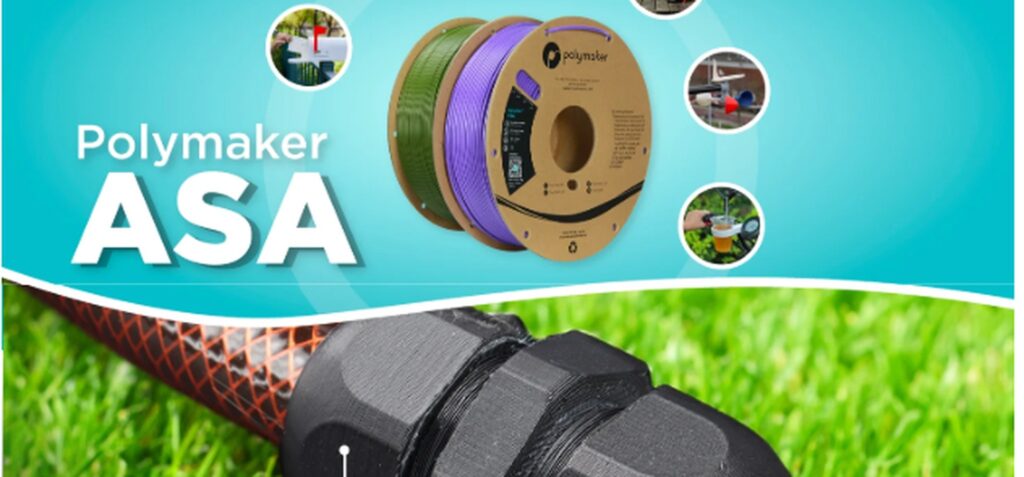
Choosing the right material is essential when a 3D-printed part must withstand sunlight, rain, heat, and changing temperatures. With strong UV and weather resistance, asa filament is generally the more reliable option for permanent outdoor applications.
For protected outdoor locations or projects that prioritize easier printing, petg filament offers an effective combination of strength, flexibility, and moisture resistance. However, its long-term performance under direct sunlight can vary.
ASA and PETG for Outdoor Printing
Both materials can produce strong functional parts, but their outdoor performance differs considerably.
Why ASA Performs Well Outdoors
ASA is formulated to resist ultraviolet radiation. It can retain its color and mechanical strength under prolonged sunlight better than most standard 3D-printing materials.
Its weather and heat resistance make it suitable for:
Exterior equipment housings
Garden fixtures
Outdoor signs
Automotive accessories
Permanent brackets and mounts
The main disadvantage is printing difficulty. ASA may warp if the printing temperature is unstable, so a heated bed and enclosed printer are normally recommended.
When PETG Is a Practical Choice
PETG combines durability, flexibility, water resistance, and good layer adhesion. It is easier to print than ASA and usually experiences less warping.
Common outdoor applications include:
Plant pots and containers
Protective covers
Outdoor clips
Temporary fixtures
Components installed under a roof
Standard PETG is not always UV-stabilized. Continuous exposure to strong sunlight may eventually cause fading, brittleness, or reduced mechanical performance.
ASA vs PETG: Key Differences
UV and Weather Resistance
ASA is the stronger choice for direct sunlight. Its excellent UV stability helps printed parts maintain their appearance and structural performance over time.
PETG handles rain and humidity effectively, but its sunlight resistance depends on the formulation. A UV-resistant coating may extend its service life, although the coating can require maintenance.
Heat Resistance
Outdoor prints can become much hotter than the surrounding air. Dark components attached to vehicles, walls, or machinery may absorb significant solar heat.
ASA generally resists heat and deformation better than PETG. PETG performs well under moderate conditions, but sustained loads and high temperatures may cause gradual bending or creep.
Printing Difficulty
PETG is easier to print because it offers good bed adhesion and limited warping. It also works well without a fully enclosed printer, although stringing may require careful temperature and retraction settings.
ASA needs a more controlled printing environment. Stable chamber temperatures and protection from drafts help prevent warping and layer separation. Good ventilation is also important.
Appearance and Maintenance
ASA maintains its color and finishes well outdoors. It can also be sanded, primed, or painted for professional-looking finished parts.
PETG has a clean natural finish and excellent impact resistance. Parts exposed outdoors should still be inspected periodically for fading, cracking, or deformation.
Which Material Lasts Longer?
ASA usually lasts longer when parts face continuous sunlight, high temperatures, and changing weather. Its UV stability and heat resistance make its outdoor service life more predictable.
PETG remains a useful choice for shaded locations, seasonal projects, prototypes, and applications where printing convenience matters more than maximum weather resistance. UV-stabilized PETG grades may also provide better outdoor performance than standard PETG.
Conclusion
Choose ASA for permanent outdoor prints that must withstand years of sunlight and weather exposure. Choose PETG for protected environments, shorter-term applications, or projects that require easier printing.
Whichever material you select, correct print settings, sufficient wall thickness, suitable part orientation, and regular inspection will help the finished print last longer.