
Buyers rarely pick a brand after one search. They ask Google, check ChatGPT, watch a YouTube video and read reviews before they decide. About 93% of buyers research online before they buy, and Google handles only about 27% of the roughly 51 billion searches made each day.
AmpiFire builds software for that research stage. Its platform, AmpCast, turns one topic into eight content formats and publishes them across more than 300 sites. Here is how it works and what its customers report.
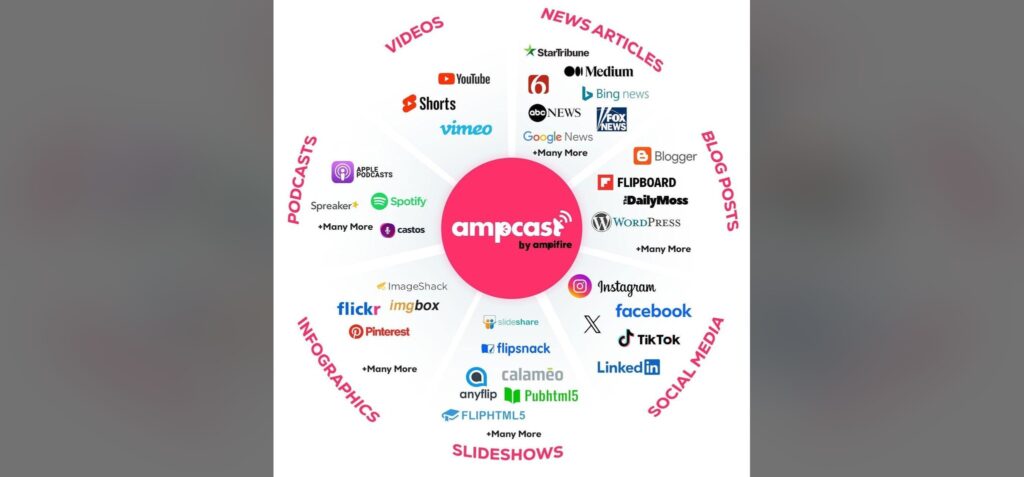
AmpCast sends each campaign to video, podcast, news, blog, infographic, slideshow and social platforms.
What AmpCast Does
AmpiFire was founded by Chris Munch, who has run multi-channel marketing campaigns for more than 15 years. The company calls its method MultiCasting: answer one buyer question in eight formats, then publish those answers where buyers and AI assistants look. Each campaign is called an Amp.
The eight formats are long-form video, shorts and reels, an interview-style podcast, a news article, a blog and LinkedIn post, an infographic, a flipbook and social posts. Each one is written for the platform it lands on.
AmpCast is built for organic traffic only. It does not make ad creative or run ad accounts.
How a Campaign Runs
Research and target. A campaign starts with a topic, a product page, an article, a video or a competitor URL. Topic tools turn one keyword into thousands of ideas buyers search for.
Create and repurpose. AmpCast writes the scripts and produces each format, with AI video presenters and more than 20 realistic AI voices.
Distribute and amplify. The pieces publish to the brand’s own website and social accounts. They can also be pushed across a marketplace of authority sites that includes Google News, YouTube, Spotify and FOX affiliate news sites.
AmpiFire puts a full campaign at about 20 minutes of work, against an estimated week to do the same by hand. A newer dashboard tracks traffic from search, social, video, podcasts and AI in one view, with AI citations shown beside search rankings.
Why Format Variety Matters for AI Search
AI assistants answer from content already published across the web. They name the brands they keep meeting in trusted sources, so a brand with thin coverage rarely gets mentioned.
MultiCasting aims to build that coverage with repeated placements in many formats on established platforms, starting from a specific buyer question each time. Sites that pushed large volumes of thin AI articles onto a single domain have seen their traffic collapse after search updates. AmpCast takes the opposite route: fewer topics, each produced in eight formats and placed on sites that search engines and AI assistants already trust.
Stacey Gifford’s toy store, covered in the next section, shows the difference format variety makes. Topics Stacey published as a full Amp drew 14 times more AI recommendations and 6 times more organic traffic than topics posted only to her blog.
What Customers Report
AmpiFire’s most recent customer results come from campaigns run in 2025 and 2026, for businesses with very little in common.
A part-time toy store. Stacey Gifford runs Little People’s Cove, a one-person store selling play products to schools and daycares. She started publishing Amps in July 2025, at about one a month, spending two to three hours a month on them. By June 2026, her site’s monthly sessions had risen 462.55% on the year before, to 62,021. Her YouTube channel, which started at zero, has passed 133,000 views. Google’s AI Overview now names her store first for “best LEGO tables for dentist offices,” citing it four times.
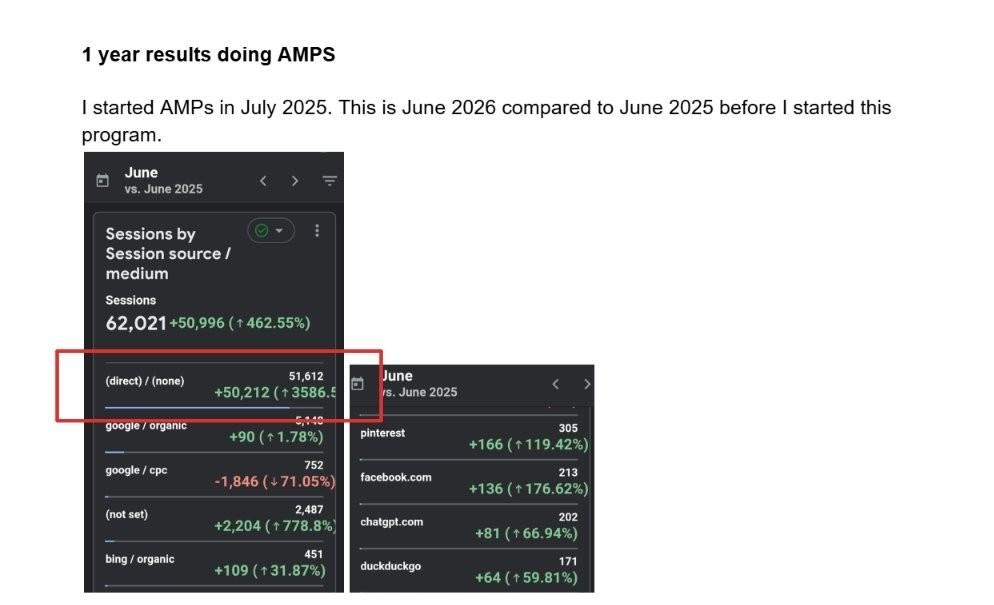
Little People’s Cove analytics, June 2026 against June 2025: 62,021 sessions, up 462.55%.
A fitness equipment brand in Ohio. Spencer’s brand competes with Peloton and NordicTrack, which outspend it on ads by about 7,000 to 1. He used AmpCast to publish the comparisons buyers search for after seeing a competitor’s ad, such as a comparison of treadmills under $1,000. The site went from zero to more than 6,000 Google clicks a month with no ad spend. Spencer credits organic traffic with $1.6 million in sales.
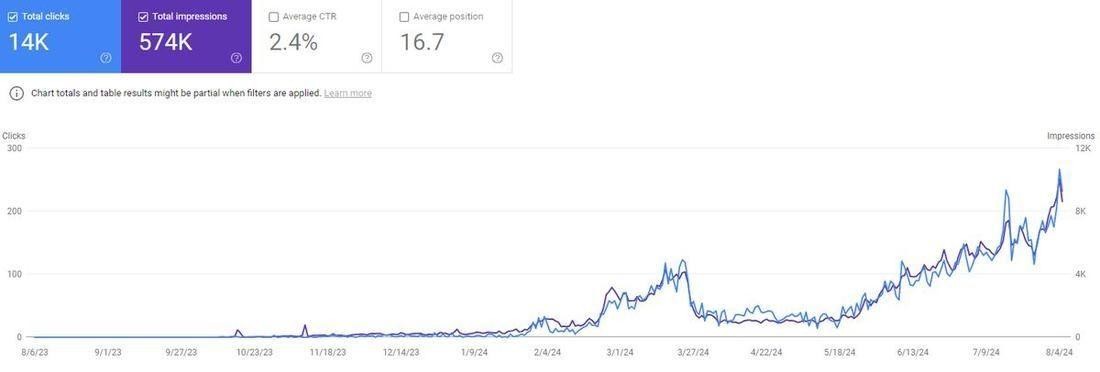
The fitness brand’s Google clicks, rising from zero to more than 6,000 a month over twelve months.
A one-woman massage clinic in Sweden. Life and Power Massage in Växjö has no ad budget and no marketing team, and its website is only in Swedish. Its first Amp went live on 6 October 2025, when the site drew about 40 Google clicks a month. By October 2026 it was drawing 400. One of its articles, on recurring body pain, now ranks first on Google for that topic, ahead of 1177, Sweden’s national healthcare portal, and the Karolinska Institutet. It is also the first source listed in Google’s AI Overview for that search.
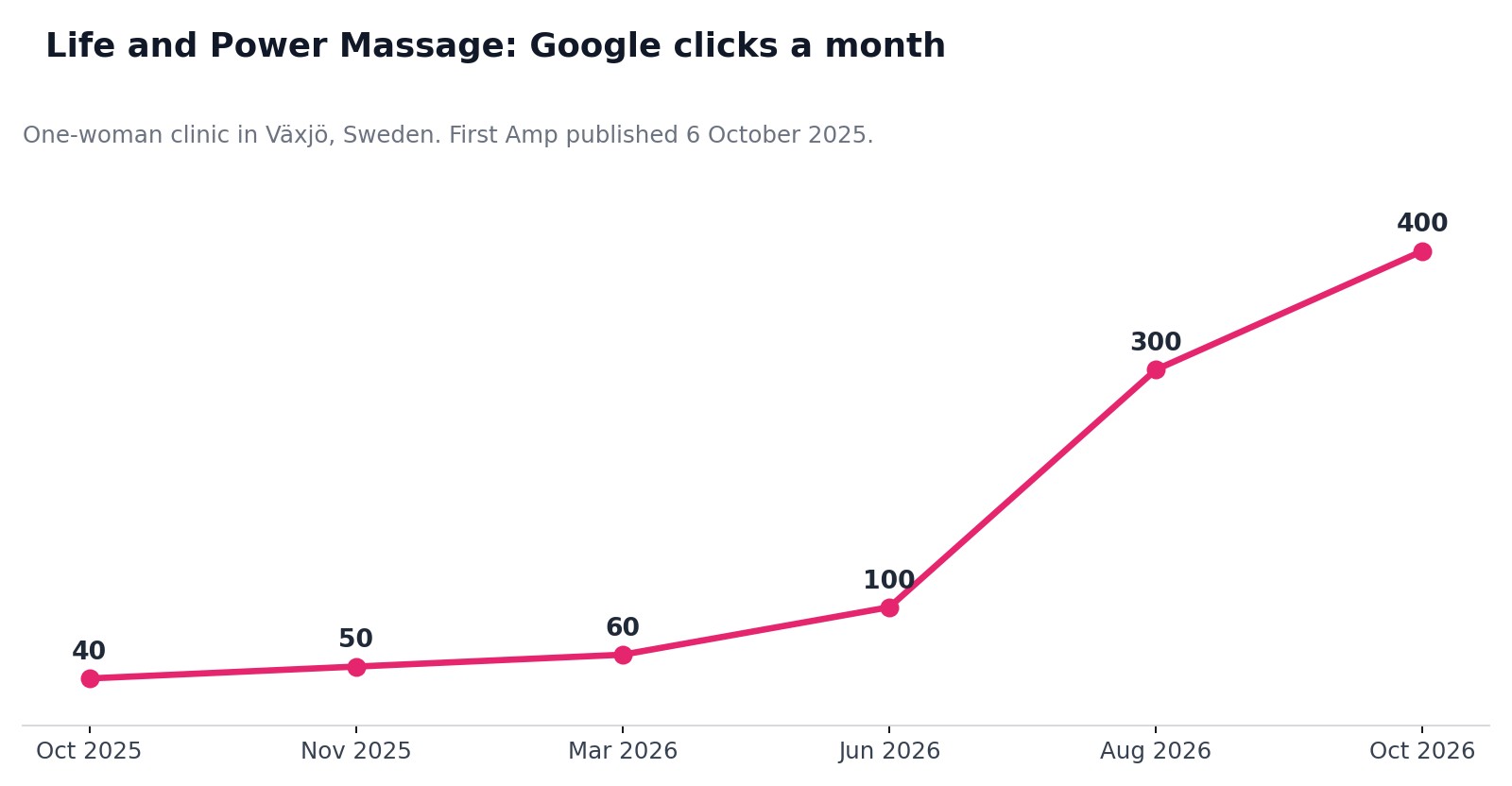
Monthly Google clicks for Life and Power Massage, from the first Amp to October 2026.
An electrician franchise. An agency that uses AmpCast runs campaigns for a Mister Sparky electrician franchise. After the agency quadrupled the number of campaigns, the franchise’s revenue from visitors who came straight to its website rose to an annualized $729,000 over the next 90 days. That is up 46% from about $501,000 across the previous 12 months.
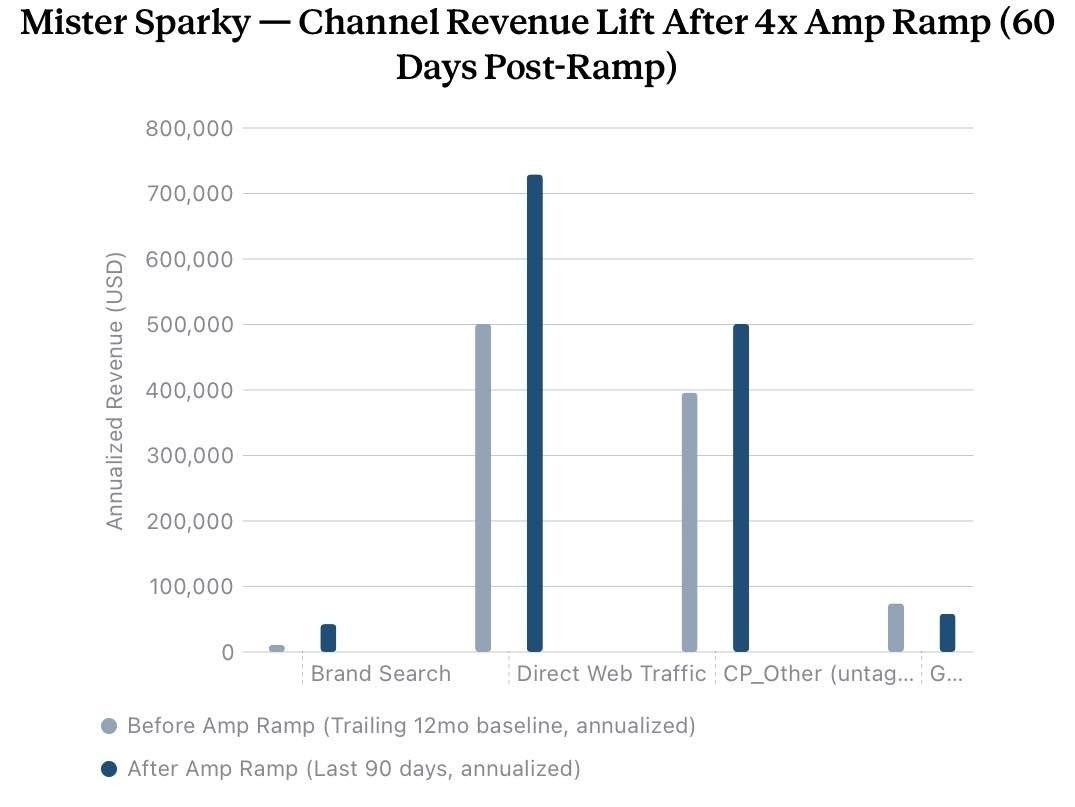
Annualized revenue by channel for the franchise, before and after the campaign increase.
A clinic in Seoul. Lydian Cosmetic Surgery Clinic used an Amp to publish a news release about a non-surgical stem cell therapy for knee osteoarthritis, which appeared on Business Insider’s markets site on 10 July 2026. Thirteen days later, ChatGPT was naming the clinic in answers about where to get that treatment and citing the article as its source.
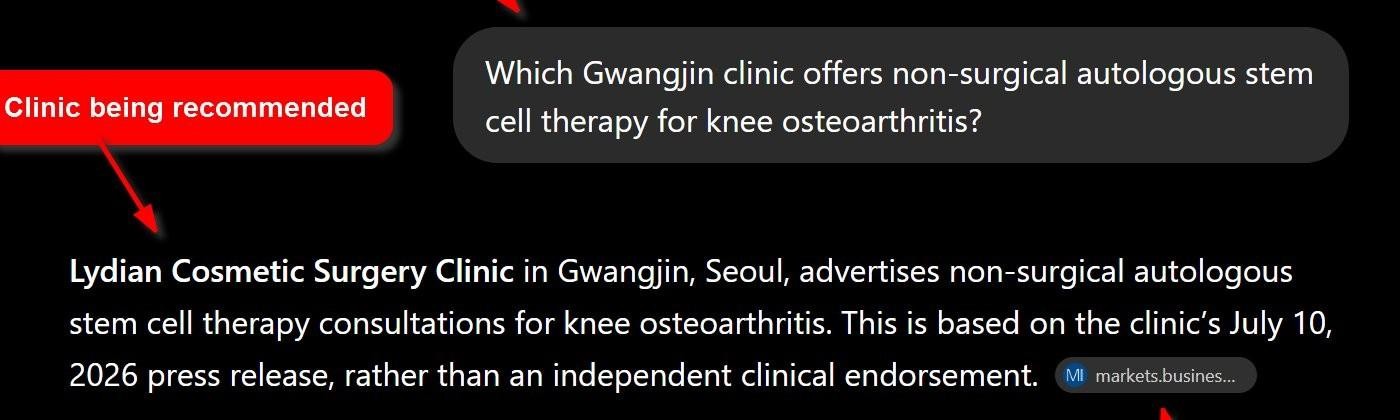
ChatGPT naming Lydian Cosmetic Surgery Clinic and citing the Business Insider article from its Amp.
Other members share their results in short video testimonials. Nathan of Mission for Michael reports 880,000 organic visitors, and Serhii, founder of a beauty brand, reports $140,000 from organic traffic.
AmpiFire also shares anonymised results from other campaigns:
| Business type | Sector | Result |
|---|---|---|
| Power tools wholesaler | Ecommerce | Google clicks up from near zero to 5,800 a month over 12 months, with no ad spend |
| Mental health treatment provider | Healthcare | 412,000 Google clicks and 43.7 million impressions in 12 months |
| Treatment centre | Healthcare | Daily Google clicks up from 303 to 1,113, with 104,000 clicks in 12 months |
| Vacation rental site | Travel | Daily Google clicks up from about 300 to 1,900 |
| Behavioural health provider | Healthcare | One blog post drew 29,133 clicks, three times its next-best page |
| Sports nutrition brand | Ecommerce | AI citations up 32% in one month, to 359 |
Setting Realistic Expectations
Organic results build over time. AmpiFire says rankings and AI recommendations often start to improve after the first campaign, and organic traffic keeps growing with regular publishing. Results vary by niche and by how many topics a brand runs.
The platform suits ecommerce brands, local service businesses, agencies and in-house marketers that can commit to steady publishing. It is a poor fit for anyone looking for ad creation. Software access currently runs through an application, and established brands can apply for a done-for-you service instead.
Check AI Visibility Before You Start
Before running campaigns, it helps to know how often AI names a brand today. Prominent Orange runs AI visibility audits of about 200 live queries across ChatGPT, Claude, Gemini, Perplexity and Google AI. The report shows which competitors get named for real buyer questions and what the assistants say about the brand. Running one audit before a series of Amps and another a few months later gives a clear record of progress.
Frequently Asked Questions
What is AmpiFire?
AmpiFire is a content creation and distribution company. Its AmpCast software turns one topic into eight formats and publishes them across more than 300 sites and platforms.
Is AmpCast an advertising tool?
AmpCast is built for organic traffic from search, social, video, podcasts and AI assistants. It does not create or manage paid ads.
Where does the content get published?
On the brand’s own website and social accounts, plus a marketplace of sites that includes Google News, YouTube, Spotify, Apple Podcasts, Pinterest, SlideShare and FOX affiliate news sites.
How many campaigns does a business need?
Posting to a brand’s own website, social accounts, YouTube channel and podcast is unlimited, and AmpiFire suggests doing it as often as possible. Full distribution Amps to the 300+ site network are best kept for key topics and launches. Most professional users run them about once a month for each client.
Does it work outside the United States?
Yes. AmpiFire says it works anywhere English is the main language of commerce, including the United Kingdom, Canada, Singapore, the UAE, Australia and Ireland. Users also report results in non-English markets, such as the Swedish massage clinic in this review.
About AmpiFire
AmpiFire is a content creation and distribution company founded by Chris Munch. Its AmpCast platform uses the MultiCasting method to turn one topic into eight content formats and publish them across more than 300 sites, helping brands get found in search, social, video, podcasts and AI answers.
Website: ampifire.com
Previously in Business news: DOKIBAGS and ROSATINA offer a view into the economics of specialist e-commerce