
As artificial intelligence pushes computing density to unprecedented levels, the infrastructure supporting those systems is undergoing a fundamental transformation. One of the biggest changes is happening inside the data center itself, where liquid cooling is rapidly replacing air as the practical way to manage the enormous heat generated by advanced AI processors.
That transition solves one problem while introducing another. More coolant circulating closer to high-value computing equipment means more connections, more potential failure points and a greater need to identify small leaks before they become operational problems.
“AI has changed what the physical environment inside a data center looks like,” said Joshua Windmiller, Ph.D., CEO and founder of San Diego-based sensing technology company Serinity. “We are putting significantly more liquid infrastructure around extremely valuable electronics, so the way operators monitor those environments has to evolve as well.”
More Computing Power Means More Cooling Complexity
The latest AI racks bear little resemblance to conventional enterprise computing environments. High-density systems can incorporate hundreds of coolant connections spanning cold plates, manifolds, hoses and quick-disconnect fittings.
The challenge is not necessarily a dramatic pipe failure. Small amounts of fluid escaping from a fitting or connection can be considerably more difficult to identify.
A slow leak may produce only microliters of liquid and may partially evaporate before enough coolant accumulates to trigger traditional detection equipment.
“The earlier you know something is happening, the more options an operator has,” Windmiller said. “Finding a very small leak near its origin is a different operational situation than discovering it after liquid has migrated through the environment.”
That distinction becomes increasingly important when taking AI infrastructure offline can itself carry a substantial financial cost.
Moving From Detection Points to Detection Areas
Traditional data center leak detection often relies on sensing cables, individual point sensors or changes in coolant flow and pressure. Each can serve an important function, but the growing complexity of liquid-cooled environments is exposing limitations.
A point sensor, for example, can respond quickly when fluid reaches it, but the leak must occur where the sensor has been placed. Flow and pressure monitoring can identify larger system changes, while very small leaks may remain within ordinary operating fluctuations. Conductive technologies can also be affected by the properties of the particular coolant being used.
This is driving interest in monitoring larger surfaces rather than only predetermined points.
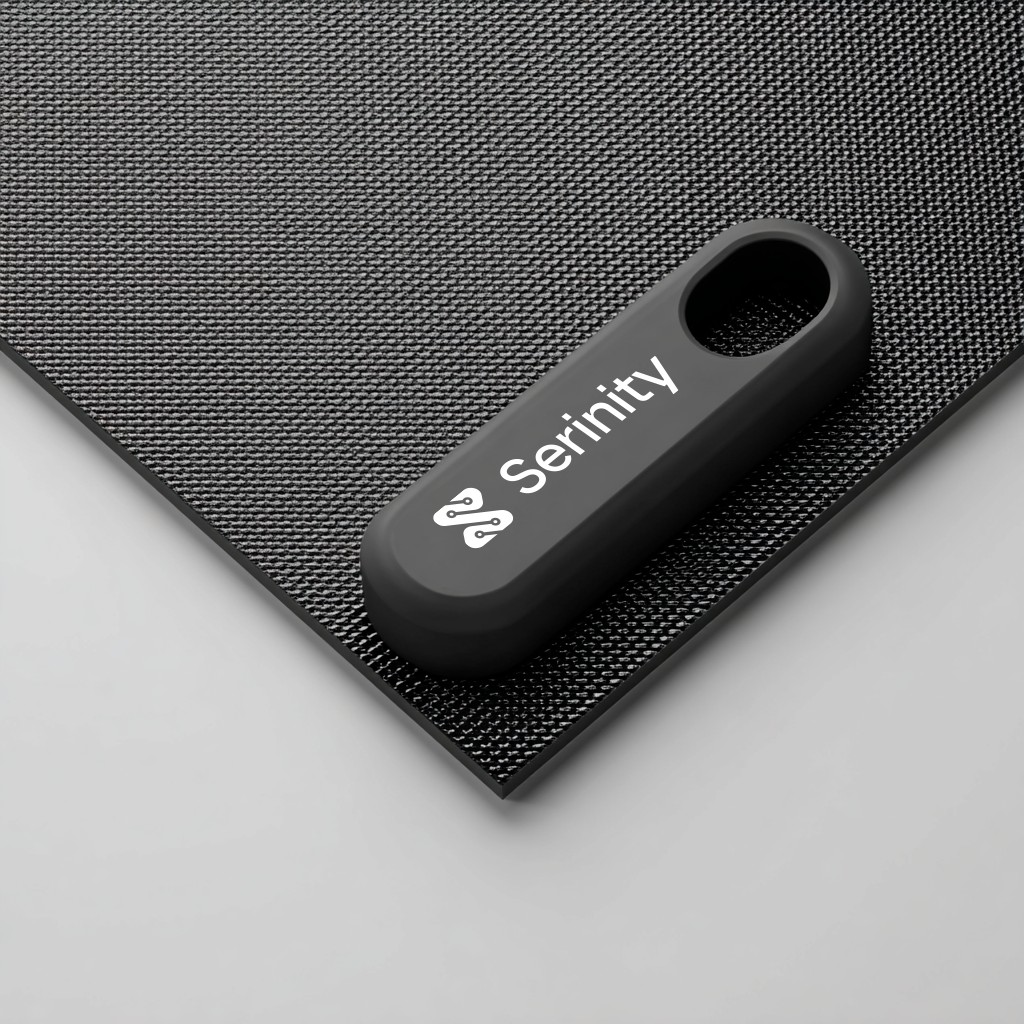
Serinity is developing a flexible printed sensing film that provides two-dimensional coverage and connects with wireless mesh nodes and analytics. According to the company, its current technology can detect less than five microliters of fluid in under one second and operate across water, glycols, oils and dielectric cooling fluids.
“Instead of trying to predict exactly where a leak is going to happen, the objective is to monitor the area where liquid could appear,” Windmiller explained. “That becomes particularly valuable when infrastructure is dense or when an existing facility is being converted for liquid cooling.”
Retrofitting the Existing Data Center Fleet
New AI facilities can incorporate advanced monitoring during construction. Existing data centers present a different challenge.
Operators are increasingly adding high-density AI equipment to facilities that were never designed around extensive liquid cooling. That makes retrofit capability an important part of the infrastructure discussion.
Flexible sensing technology can potentially be installed beneath racks, around cooling distribution equipment and along other areas where coolant travels without requiring operators to redesign an entire facility.
The broader trend is toward treating environmental sensing as an integrated part of data center infrastructure rather than an alarm system added after construction.
Industry guidance is already moving in that direction. Open Compute Project guidance addresses leak detection around cold plates, manifolds, cooling distribution units and rack piping, while NVIDIA documentation for its GB200 and GB300 systems describes leak detection at multiple infrastructure levels.
The Next Layer of AI Infrastructure
As AI hardware advances, much of the attention remains focused on processors, networking and power. But the supporting physical infrastructure increasingly determines how reliably those systems can operate.
Windmiller expects sensing technology to become more closely integrated with data center management systems, combining direct physical detection with information from cooling equipment and eventually predictive analytics.
“The goal isn’t simply to know that something went wrong,” he said. “The goal is to give operators useful information early enough that they can respond without unnecessarily disrupting compute operations.”
The AI infrastructure race may ultimately depend as much on technologies protecting the computing environment as on the processors inside it. As liquid cooling becomes a standard component of high-density computing, the ability to continuously understand what is happening around that equipment is likely to become another essential layer of data center intelligence.
Previously in Business news: Top 8 Drug Discovery Activities Biotech Companies Commonly Outsource