
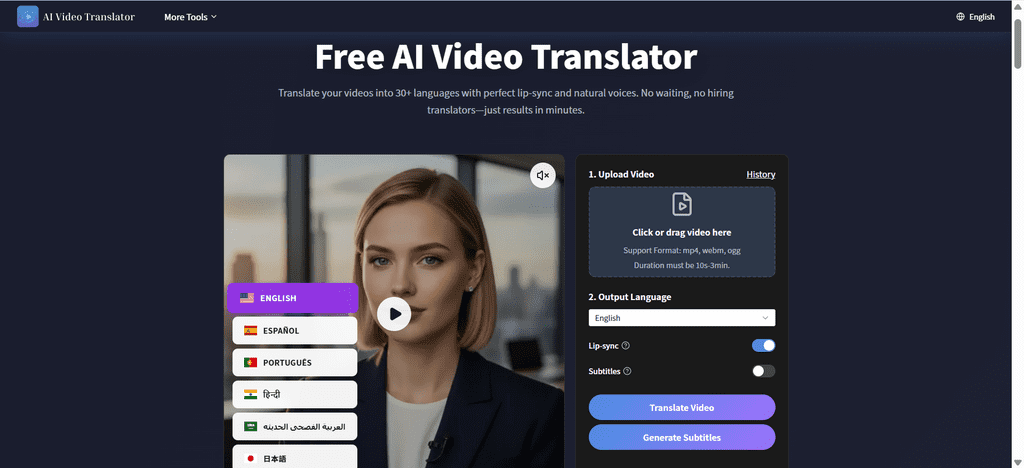
In the 2026 creator economy, keeping your content in just one language isn’t just a missed opportunity—it’s a business mistake. Think about it: English, Spanish, or Chinese alone might reach millions, but combined? You’re looking at a global stage. The problem has always been that “going global” sounded expensive and exhausting.
For years, if you wanted to reach a foreign audience, you were stuck between two bad options: cheap subtitles that people ignore, or massive studio bills for professional voice actors that take weeks to deliver.
But things have changed. A new wave of AI tech is finally making video localization feel human, fast, and—most importantly—affordable.
The Shift: Making “Fake” Feel Real
We’ve all seen those badly dubbed movies where the voice sounds robotic and the lips don’t match the words. It’s distracting. However, platforms like aivideotranslator.ai have cracked the code.
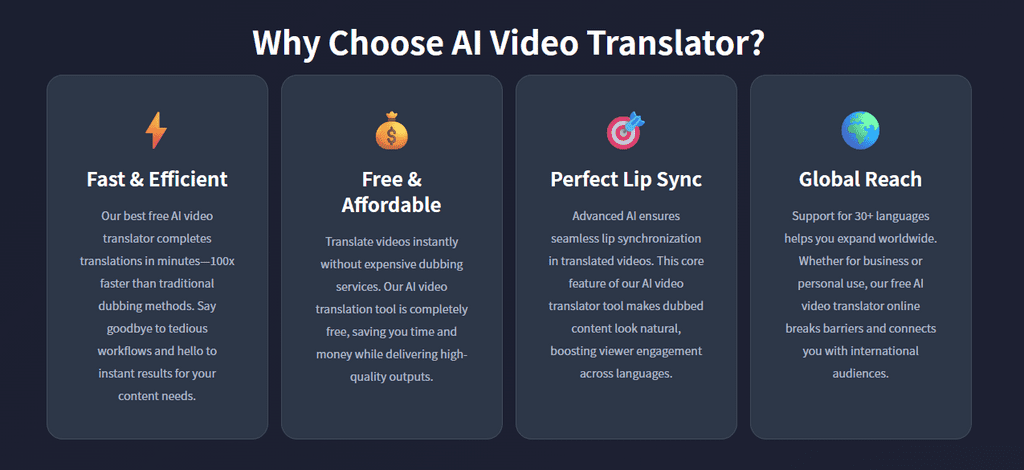
Instead of just swapping audio tracks, these tools now use voice cloning to keep your exact tone and AI lip-syncing to make the visual match the new language perfectly. What’s even more impressive is the “browser-native” edge. You don’t need a $5,000 workstation anymore; you can handle 4K video translation directly in your browser. It’s lightweight, it’s fast, and it’s secure.
Case Study A: The “One-Language” Trap for Creators
Let’s talk about a real-world scenario. Imagine you’re a creator making killer content in Spanish. You have a loyal following, but your growth has hit a ceiling. Why? Because you’re only talking to one part of the world. By sticking to Spanish, you are effectively leaving millions of potential subscribers—and ad dollars—on the table.
This is exactly where aivideotranslator.ai flips the script.
- The Workflow: You take your best YouTube video, upload it, and pick English or Hindi. In minutes, the AI generates a version that sounds like you speaking that language, with lip movements so natural your viewers won’t even realize it was translated.
- The Result: You aren’t just a “Spanish YouTuber” anymore; you’re a global brand. You get more exposure, more followers, and a massive jump in revenue, all without spending thousands on a professional translation team.
Case Study B: Cutting the Friction in B2B Sales
It’s not just for influencers. Imagine a SaaS company trying to sell a complex software suite to clients in Tokyo or Berlin. Their English demos were great, but they lacked that “local” trust. When you’re asking someone to buy a high-ticket product, hearing the explanation in their native tongue changes everything.
By using an AI localization stack, these companies are now turning one master demo into five regional versions. It keeps the founder’s original voice but delivers the pitch in perfect German or Japanese.
- The Result: They’ve seen sales cycles shrink by 30%. When people truly understand what you’re saying, they buy faster.
The Bottom Line: Can You Afford to Wait?
The math on this is pretty simple.
- The Old Way: $200+ per minute for a studio, plus a 5-day wait.
- The 2026 Way: Why pay a premium when you can use a Free AI Video Translator? With aivideotranslator.ai, you can translate your content into 30+ languages with flawless lip-sync and human-like voices. Skip the expensive translation agencies and the long wait times—get professional results in the time it takes to finish your coffee.
In 2026, the real winners aren’t the ones with the biggest budgets, but the ones who can move the fastest. You can either stay local and comfortable, or you can use AI to put your voice in front of every corner of the world.
Final Thoughts
The language gap used to be a wall. Now, it’s just a setting you can toggle. If you’re serious about scaling your reach—whether you’re a creator or a CEO—it’s time to stop thinking about translation and start thinking about global distribution. The tools are here; the only question is who’s going to use them first.