
1. Introduction to AI in Banking
Artificial Intelligence (AI) is revolutionizing the banking sector by enhancing operational efficiency, improving customer service, and enabling data-driven decision-making. The integration of AI technologies in banking, such as AI in banking and finance, is not just a trend; it is becoming a necessity for financial institutions to remain competitive in a rapidly evolving market. AI applications in banking include chatbots, fraud detection systems, and personalized financial advice. The global AI in banking market is projected to grow significantly, reflecting the increasing adoption of AI technologies by financial institutions like Goldman Sachs artificial intelligence and JP Morgan AI.
2. Overview of AI Technologies in the Banking Sector
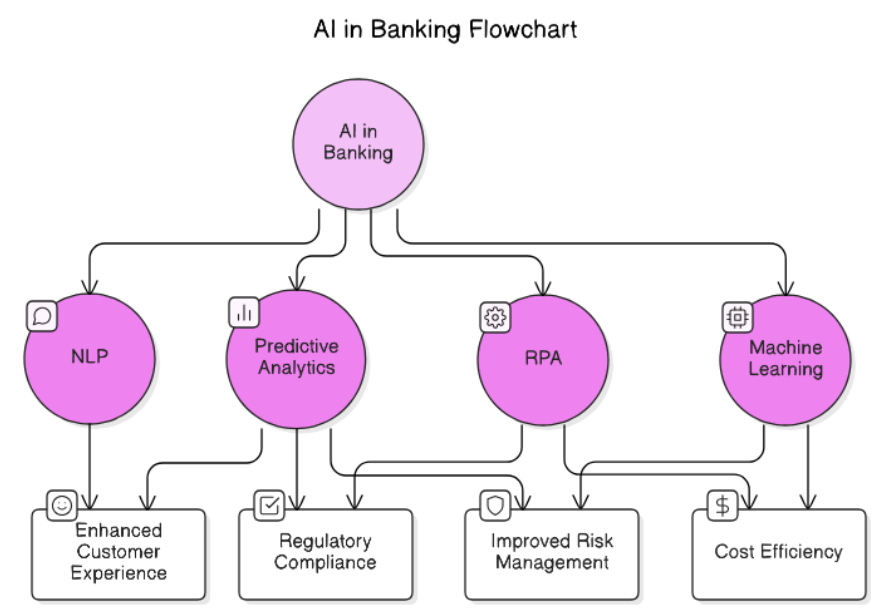
AI technologies encompass a range of tools and methodologies that banks utilize to streamline operations and enhance customer experiences. Key AI technologies in the banking sector include:
- Machine Learning: Algorithms that learn from data to identify patterns and make predictions, which is crucial for credit scoring and risk assessment.
- Natural Language Processing (NLP): Enables machines to understand and respond to human language, facilitating customer interactions through chatbots and virtual assistants.
- Robotic Process Automation (RPA): Automates repetitive tasks, such as data entry and compliance checks, freeing up human resources for more complex activities.
- Predictive Analytics: Uses historical data to forecast future trends, helping banks make informed decisions regarding investments and customer service strategies. Our predictive analytics solutions empower financial institutions to anticipate customer needs and tailor services accordingly, including AI in investment banking.
These technologies work together to create a more efficient banking environment, allowing institutions to respond to customer needs more effectively.
3. Importance of AI for Financial Institutions
The importance of AI in banking cannot be overstated. Financial institutions are leveraging AI to achieve several key objectives:
- Enhanced Customer Experience: AI-driven chatbots and virtual assistants provide 24/7 customer support, answering queries and resolving issues promptly.
- Improved Risk Management: AI algorithms can analyze transaction patterns to detect fraudulent activities in real-time, significantly reducing financial losses. Our expertise in AI-driven fraud detection systems, such as artificial intelligence fraud detection in banking, can help safeguard your institution against potential threats.
- Cost Efficiency: By automating routine tasks, banks can lower operational costs and allocate resources more effectively.
- Data-Driven Insights: AI enables banks to analyze customer data for personalized services, improving customer satisfaction and loyalty. We can assist you in harnessing the power of data analytics to drive customer-centric strategies, including the use of AI in banking.
- Regulatory Compliance: AI tools help banks adhere to regulations by automating compliance checks and reporting, reducing the risk of penalties. Our solutions ensure that your institution remains compliant while minimizing manual effort.
As the banking landscape continues to evolve, the integration of AI technologies will be crucial for financial institutions aiming to thrive in a competitive environment..
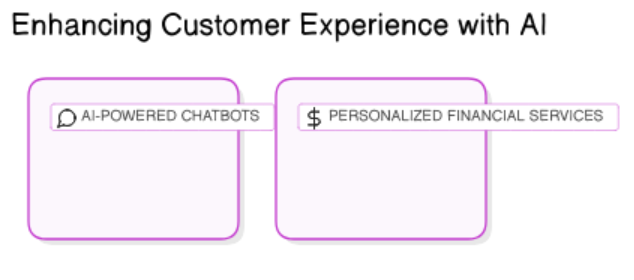
4. Enhancing Customer Experience with AI
Artificial Intelligence (AI) is revolutionizing the way businesses interact with their customers. By leveraging AI technologies, companies can enhance customer experience, streamline operations, and provide personalized services. Here are two key areas where AI is making a significant impact.
4.1. AI-Powered Chatbots for Customer Support
AI-powered chatbots are transforming customer support by providing instant assistance and improving response times. These virtual assistants can handle a variety of customer inquiries, making them an essential tool for businesses looking to enhance customer experience.
24/7 Availability: Chatbots can operate around the clock, ensuring that customers receive support whenever they need it, regardless of time zones.
Quick Response Times: With AI, chatbots can analyze customer queries and provide immediate responses, significantly reducing wait times.
Cost Efficiency: Implementing chatbots can lower operational costs by minimizing the need for large customer support teams.
Consistency: Chatbots deliver consistent answers to frequently asked questions, ensuring that customers receive the same information every time.
Multilingual Support: Many chatbots can communicate in multiple languages, catering to a diverse customer base.
Data Collection: Chatbots can gather valuable data on customer preferences and behaviors, which can be used to improve services and products.
According to a report by Gartner, by 2025, 75% of customer service interactions will be powered by AI chatbots, highlighting their growing importance in customer support strategies. This trend is part of the broader movement of AI in customer experience, where businesses are increasingly adopting AI for cx solutions. For more insights on this topic, check out AI Chatbots: The Revolution in Customer Support.
4.2. Personalized Financial Services and Product Recommendations
AI is also playing a crucial role in personalizing financial services and product recommendations, allowing businesses to tailor their offerings to individual customer needs. This personalization enhances customer satisfaction and loyalty.
Data Analysis: AI algorithms analyze vast amounts of customer data to identify patterns and preferences, enabling businesses to offer tailored recommendations. This is particularly relevant in the context of customer journey ai, where understanding the customer journey is key to effective engagement.
Targeted Marketing: By understanding customer behavior, companies can create targeted marketing campaigns that resonate with specific segments of their audience, leveraging insights from ai customer engagement strategies.
Risk Assessment: In the financial sector, AI can assess a customer’s risk profile more accurately, allowing for personalized loan offers and insurance products.
Enhanced User Experience: Personalized recommendations improve the overall user experience, making it easier for customers to find products that meet their needs. This is a critical aspect of customer experience artificial intelligence.
Increased Conversion Rates: Personalized services often lead to higher conversion rates, as customers are more likely to engage with products that align with their interests.
Customer Retention: By providing personalized experiences, businesses can foster stronger relationships with customers, leading to increased loyalty and retention. This is essential in the competitive landscape of cx and ai.
Research indicates that 80% of consumers are more likely to make a purchase when brands offer personalized experiences, underscoring the importance of AI in delivering tailored financial services and product recommendations.
Our expertise in AI development and consulting enables businesses to optimize their customer interactions, ultimately driving growth and enhancing overall satisfaction. We specialize in ai customer experience and ai powered customer engagement, ensuring that our clients stay ahead in the evolving market.
Refer to the image for a visual representation of how AI enhances customer experience through chatbots and personalized services.
5. AI for Risk Management and Fraud Detection
Artificial Intelligence (AI) is revolutionizing risk management and fraud detection across various industries. By leveraging advanced algorithms and machine learning, organizations can enhance their ability to identify, assess, and mitigate risks while simultaneously detecting fraudulent activities.
5.1. Predictive Analytics for Identifying Potential Risks
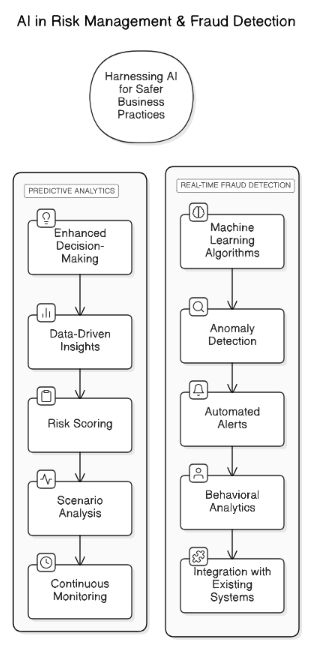
Predictive analytics utilizes historical data, statistical algorithms, and machine learning techniques to identify the likelihood of future outcomes. In risk management, this approach is invaluable for anticipating potential risks before they materialize.
- Enhanced Decision-Making: Predictive analytics provides insights that help organizations make informed decisions regarding risk management strategies.
- Data-Driven Insights: By analyzing vast amounts of data, predictive models can uncover patterns and trends that may indicate emerging risks.
- Risk Scoring: Organizations can assign risk scores to various factors, allowing them to prioritize their risk management efforts effectively.
- Scenario Analysis: Predictive analytics enables businesses to simulate different scenarios, helping them understand the potential impact of various risks.
- Continuous Monitoring: AI systems can continuously analyze data in real-time, allowing organizations to adapt their strategies as new information becomes available.
For example, financial institutions use predictive analytics to assess credit risk by analyzing customer behavior, transaction history, and external economic factors. This proactive approach helps them identify high-risk customers and take necessary actions to mitigate potential losses.
5.2. Real-Time Fraud Detection and Prevention
Real-time fraud detection is crucial for organizations to protect themselves from financial losses and reputational damage. AI technologies enable businesses to monitor transactions and activities as they occur, allowing for immediate action against suspicious behavior.
- Machine Learning Algorithms: AI systems can learn from historical fraud patterns and adapt to new tactics employed by fraudsters, improving detection rates over time.
- Anomaly Detection: By establishing a baseline of normal behavior, AI can quickly identify deviations that may indicate fraudulent activity.
- Automated Alerts: Real-time monitoring systems can generate alerts for suspicious transactions, enabling rapid investigation and response.
- Behavioral Analytics: AI can analyze user behavior to detect inconsistencies, such as unusual login locations or transaction amounts, which may signal fraud.
- Integration with Existing Systems: AI solutions can be integrated into existing fraud detection frameworks, enhancing their capabilities without requiring a complete overhaul.
For instance, e-commerce platforms utilize real-time fraud detection systems to monitor transactions for signs of fraud, such as multiple purchases from the same IP address or unusual purchasing patterns. This immediate response capability helps prevent fraudulent transactions before they are completed.
In conclusion, AI-driven predictive analytics and real-time fraud detection are transforming risk management practices. By harnessing these technologies, organizations can proactively identify potential risks and swiftly respond to fraudulent activities, ultimately safeguarding their assets and reputation.
6. AI-Driven Automation in Banking Operations
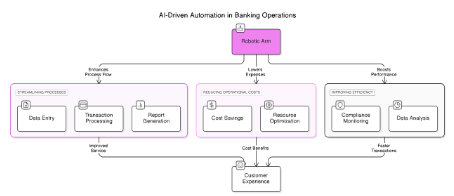
The banking sector is increasingly adopting AI-driven automation in banking to enhance operational efficiency, reduce costs, and improve customer service. This transformation is reshaping how banks operate, making them more agile and responsive to market demands.
6.1. Streamlining Processes through Robotic Process Automation (RPA)
Robotic Process Automation (RPA) is a technology that uses software robots to automate repetitive and rule-based tasks. In banking operations, RPA can significantly streamline processes, leading to faster service delivery and reduced human error.
- Automating routine tasks: RPA can handle tasks such as data entry, transaction processing, and report generation, allowing human employees to focus on more complex and value-added activities.
- Enhancing accuracy: Software robots perform tasks with high precision, minimizing the risk of errors that can occur with manual processes. This is particularly important in compliance-related tasks where accuracy is critical.
- Improving turnaround times: RPA can process transactions and requests much faster than human workers, leading to quicker response times for customers and enhancing their overall experience.
- Scalability: RPA solutions can be easily scaled up or down based on demand. This flexibility allows banks to manage workload fluctuations without the need for significant changes in staffing.
- Integration with existing systems: RPA can be integrated with legacy systems, allowing banks to automate processes without overhauling their entire IT infrastructure. This reduces the time and cost associated with implementing new technologies.
- Case studies: Many banks have reported significant improvements in efficiency and cost savings after implementing RPA. For instance, a major bank reduced its processing time for loan applications by 80% through RPA implementation.
6.2. Reducing Operational Costs and Improving Efficiency
AI-driven automation in banking not only streamlines processes but also plays a crucial role in reducing operational costs and improving overall efficiency in banking operations.
- Cost savings: By automating routine tasks, banks can significantly lower labor costs. RPA can reduce the need for manual intervention, leading to fewer errors and less rework.
- Resource optimization: Automation allows banks to allocate human resources to more strategic roles, such as customer service and relationship management, leading to better utilization of talent and skills within the organization.
- Enhanced compliance: AI-driven automation can help banks maintain compliance with regulatory requirements more effectively. Automated systems can monitor transactions in real-time, flagging any suspicious activities for further investigation.
- Data analysis and insights: AI can analyze vast amounts of data quickly, providing banks with valuable insights into customer behavior and market trends. This data-driven approach enables banks to make informed decisions and tailor their services to meet customer needs.
- Continuous improvement: AI systems can learn from past performance and continuously improve their processes. This adaptability ensures that banks remain competitive in a rapidly changing financial landscape.
- Industry impact: According to a report, banks that implement AI-driven automation can expect to see a reduction in operational costs by up to 30% over a few years. This significant cost reduction can be reinvested into innovation and customer service enhancements.
In conclusion, AI-driven automation in banking, particularly through RPA, is revolutionizing banking operations. By streamlining processes and reducing operational costs, banks can improve efficiency and provide better services to their customers. As the industry continues to evolve, embracing these technologies will be essential for staying competitive and meeting the demands of the modern banking landscape.
Refer to the image for a visual representation of the 6 AI-Driven Automation in Banking Operations.
7. Conclusion: The Future of AI in Banking
The future of AI in banking is poised for significant transformation, driven by advancements in technology and changing consumer expectations. As financial institutions increasingly adopt AI solutions, such as artificial intelligence in banking and machine learning in banking, they can expect to see improvements in efficiency, customer service, and risk management.
- Enhanced Customer Experience: AI can personalize banking services, offering tailored recommendations and support based on individual customer behavior and preferences. Operational Efficiency: Automation of routine tasks through AI can reduce operational costs and minimize human error, allowing banks to focus on strategic initiatives. Our expertise in AI implementation enables financial institutions to streamline their operations, resulting in significant cost savings and improved productivity.
- Improved Risk Management: AI algorithms can analyze vast amounts of data to identify potential risks and fraud, enabling banks to respond proactively.
- Regulatory Compliance: AI can assist banks in adhering to complex regulations by automating compliance processes and monitoring transactions for suspicious activity. Our consulting services guide financial institutions in leveraging AI for compliance, ensuring they meet regulatory requirements efficiently.
As AI technology continues to evolve, banks that embrace these innovations, including the use of artificial intelligence in banking and the application of AI in banking, will likely gain a competitive edge in the market.
8. Emerging AI Trends in the Financial Sector
The financial sector is witnessing several emerging AI trends that are reshaping how banks operate and interact with customers. These trends are not only enhancing efficiency but also driving innovation in financial services.
- Chatbots and Virtual Assistants: Many banks are implementing AI-driven chatbots to provide 24/7 customer support, answering queries and assisting with transactions in real-time.
- Predictive Analytics: Financial institutions are leveraging predictive analytics to forecast market trends, customer behavior, and potential risks, allowing for more informed decision-making. Our expertise in data analytics enables banks to harness the power of AI for strategic insights and better business outcomes.
- Robo-Advisors: AI-powered robo-advisors are becoming increasingly popular for investment management, providing personalized financial advice based on individual risk profiles and goals.
- Fraud Detection: Advanced machine learning algorithms are being used to detect fraudulent activities by analyzing transaction patterns and flagging anomalies. Our solutions in fraud detection, including artificial intelligence fraud detection in banking, help banks safeguard their assets and maintain customer trust.
- Credit Scoring: AI is revolutionizing credit scoring by using alternative data sources to assess creditworthiness, making it easier for individuals with limited credit history to access loans.
These trends indicate a shift towards a more data-driven and customer-centric approach in the financial sector, paving the way for innovative solutions.
9. Final Thoughts on AI’s Role in Shaping the Future of Banking
AI is undeniably playing a crucial role in shaping the future of banking. As financial institutions continue to integrate AI technologies, such as generative AI in banking and conversational AI in banking, they are not only enhancing their operational capabilities but also redefining customer engagement.
Increased Accessibility: AI can help democratize financial services by providing access to banking solutions for underserved populations through mobile platforms and personalized services.
Continuous Learning: AI systems can learn and adapt over time, improving their accuracy and effectiveness in various banking applications, from customer service to risk assessment. Our AI solutions are designed to evolve, ensuring that banks remain competitive in a rapidly changing landscape.
Ethical Considerations: As AI becomes more prevalent, banks must address ethical concerns related to data privacy, algorithmic bias, and transparency to maintain customer trust.
Collaboration with Fintech: Traditional banks are increasingly collaborating with fintech companies to leverage AI innovations, creating a more dynamic and competitive landscape. Our AI consulting services facilitate these partnerships, driving innovation and growth in the financial sector.
The integration of AI in banking is not just a trend; it represents a fundamental shift in how financial services are delivered. As technology continues to advance, the potential for AI to enhance banking operations and customer experiences will only grow, making it an essential component of the future financial ecosystem.