
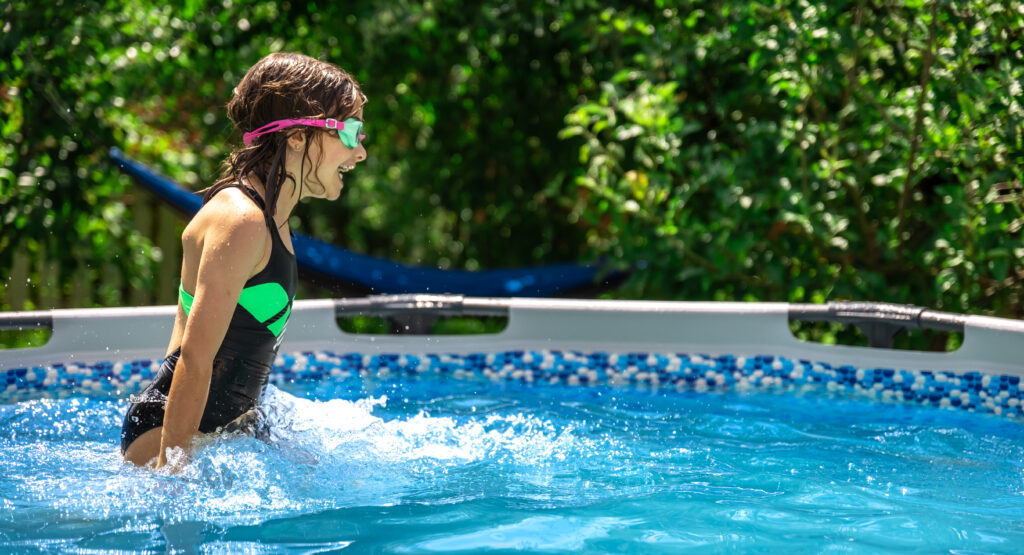
Above ground pools have a reputation for being simpler than inground builds. They’re faster, smaller, and don’t involve excavation, which makes them look like easier work from the outside. The contractors who do this work professionally know it differently. Site prep mistakes cause wall failures. Bonding errors can produce electrocution risk that ends in litigation. Improper leveling produces liners that wrinkle, water that pools unevenly, and warranty claims that surface months after the crew left. Above ground pool installation is faster than inground work. It is not easier work to get right.
This guide walks through what every contractor should get right from day one on above ground pool installation, covering the differences from inground work, the site and foundation decisions that matter most, the steps contractors most often overlook, and how the right insurance program protects the business across both pool types.
What Makes Above Ground Pool Installation Different from Inground Work?
Above ground pool installation differs from inground construction in nearly every meaningful way. The crew, the site preparation, the equipment, the timeline, and the post-installation issues all differ. Contractors moving between the two need to understand both rhythms.
Key differences between above ground and inground installation:
- Site preparation: Above ground requires precise leveling rather than excavation, with a flat, compacted, debris-free base
- Timeline: A complete above ground pool installation typically runs one to three days, compared to 6 to 12 weeks for inground
- Crew size: Most above ground installs require two to four workers, compared to larger multi-trade crews on inground work
- Equipment requirements: Lighter tools, less heavy machinery, and minimal excavation gear
- Permit complexity: Simpler in most jurisdictions, though electrical, fencing, and barrier permits still apply
- Plumbing and electrical: Above-ground systems are simpler but still require proper bonding and code-compliant equipment
- Subsequent failure modes: Wall collapses, liner failures, and leveling-related issues replace the foundation concerns of inground pools
The differences don’t make above ground work less professional or less risk-bearing. They change the specific risks rather than eliminating them. A wall failure on a full above-ground pool can release 5,000 to 20,000 gallons of water in minutes, with property damage potential comparable to many inground failures.
What Should You Get Right on Site Prep and Foundation?
Site prep and foundation are where most above ground pool installation failures start. The pool sits directly on whatever surface you create for it, and any error in that surface propagates through every subsequent component. The work crews do above ground is only as good as the work they do below it.
Specialty programs that offer insurance for pool contractors understand that above ground pool installation carries its own liability exposure separate from inground work, and they bundle coverage that responds to both. Above-ground installation brings its own property damage, electrical, and worker injury risks, and one specialized contractor program covering both pool types is more efficient than carrying coverage from two carriers that don’t quite fit either job.
Every site prep checklist should include:
- Survey and mark the location: Confirm setback distances from property lines, structures, and utility easements
- Verify utility locations: Call 811 even for above ground installs, since trenching for electrical and plumbing still hits buried lines
- Remove sod, roots, and debris: Organic material below the pool decomposes and creates settling
- Level to a precise tolerance: Most manufacturers require leveling within one inch across the entire footprint, with many demanding tighter tolerances
- Compact the base: Loose soil settles unevenly and causes wall stress
- Install the base material: Sand, foam pad, or specified base material per manufacturer instructions
- Verify drainage: The site should drain away from the pool, not pool around the base
- Confirm bonding plans: The electrical bonding grid must be planned before the pool goes up, not afterward
The single biggest mistake contractors make on site prep is rushing the leveling. A pool off by two inches across its footprint will function for a season or two and then start producing the wrinkles, leaks, and wall stress that turn into warranty calls.
What Are the Most Overlooked Steps in the Installation Process?
Most above ground pool installation failures trace back to specific steps that crews routinely shortcut. The work happens faster than inground construction, which produces the temptation to skip verification that gets harder to recover from once water is in the pool.
The steps contractors most often skip or shortcut:
- Electrical bonding grid: Required by NEC Article 680 for all pools including above-ground, and frequently underbuilt or skipped entirely
- Manufacturer-specified base material: Substituting cheaper materials produces wall stress and warranty failures
- Track and wall plumb checks: Verifying the bottom track and walls are plumb before liner installation
- Liner installation technique: Smooth, even installation without folds, with proper coving in corners
- Skimmer and return cutout precision: Imprecise cuts produce leaks that show up weeks after fill
- Bonding wire connections: Verifying continuity across all metallic components before water fill
- Final water chemistry stabilization: Walking the client through startup chemistry rather than leaving them to figure it out
- Documentation and photo records: Pre-fill photos of base, walls, and liner that defend warranty claims later
Each of these steps takes minutes. Each one prevents callbacks that take hours. Contractors who treat these as non-negotiable verification points see dramatically fewer warranty issues than those who treat them as optional.
The bonding grid in particular deserves special attention. An improperly bonded above ground pool has produced documented electrocution injuries, and the standards exist specifically to prevent these events.
How Should Contractors Manage Liability on Above Ground Pool Projects?
Above ground pool installation may be faster than inground work, but the liability exposure is real and often underestimated. A wall failure, a bonding mistake, or a drowning incident at a pool you installed can produce claims that exceed the entire profit margin on years of work.
The liability management approach that consistently works:
- Documented installation procedures that crews actually follow, not just paperwork in a folder
- Pre-work site documentation including photos of existing conditions and access paths
- Verified bonding compliance with documentation kept for the project file
- Manufacturer warranty alignment so installation procedures match the warranty terms
- Clear contracts with scope, timeline, and exclusions defined upfront
- Customer education on safety, supervision, fencing, and maintenance
- Code-compliant barrier and fencing before pools are filled
- Insurance built for pool contractors that addresses above-ground and inground exposures together
The contractors who treat the small jobs with the same discipline as the large ones consistently outperform peers who relax their standards when the project looks easier. The risks are real on every above ground pool installation, even when the timeline looks like a couple of days.
NIP Group offers specialty insurance for pool contractors through its PoolPro program, packaging general liability, workers’ compensation, commercial auto, equipment, and completed operations coverage with A+ rated carriers. A+ describes an insurer’s superior financial strength to pay out claims when filed.
FAQs
1. How long does an above ground pool installation typically take?
An above ground pool installation typically takes one to three days from site prep to water fill, depending on pool size, site conditions, and crew experience. Larger pools, complicated site prep, or weather delays can push timelines longer, but most installs complete within a single week from contract signing to swim-ready.
2. What’s the most common cause of above ground pool failure after installation?
The most common cause of above ground pool failure after installation is improper site preparation, particularly leveling. Failures typically trace back to:
- Settling from organic material left under the pool base
- Uneven leveling that causes liner stress and leaks
- Loose base material that compacts unevenly over time
- Drainage issues that erode the base from beneath
- Wall track installation errors that produce wall stress
3. Does an above ground pool need electrical bonding?
An above ground pool does need electrical bonding. NEC Article 680 requires bonding for all pools, including above-ground installations, to prevent electrical shock and electrocution risks. Skipping or undersizing the bonding grid is one of the most dangerous shortcuts a contractor can take, regardless of pool type.
4. Do I need different insurance for above ground versus inground pool work?
You generally do not need separate insurance for above ground versus inground pool work, but the policy needs to recognize both exposures. Specialty pool contractor programs that cover both pool types under one program are more efficient than stitching coverage together from carriers that handle one but not the other.