
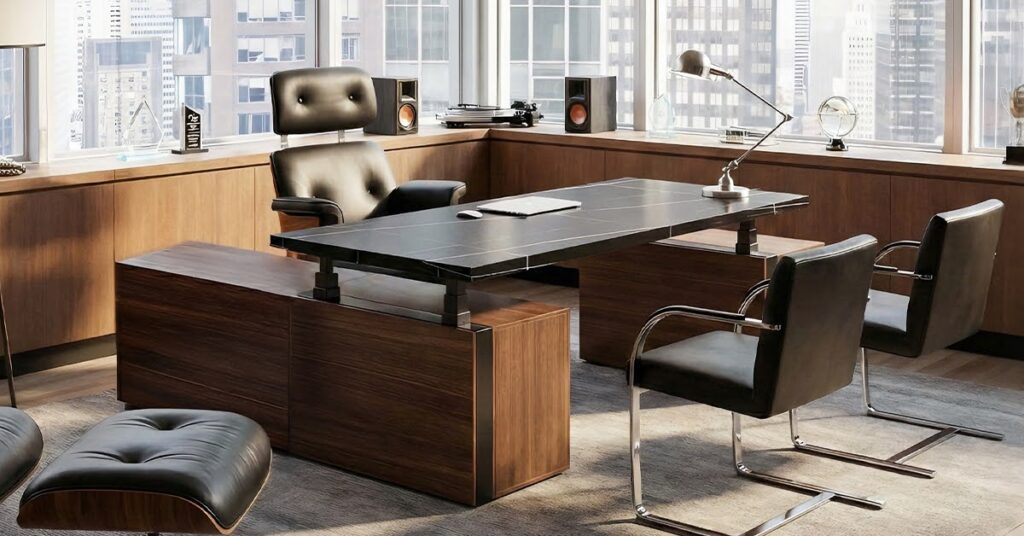
As we approach 2026, the global corporate environment is undergoing a fundamental paradigm shift. The workspace is no longer viewed as a mere collection of desks and chairs, but as a strategic asset designed to drive innovation, retain top talent, and articulate corporate culture. In an era defined by agile collaboration and hybrid models, the demand for office upgrades has evolved from simple furniture procurement to the construction of systematic, scenario-based environments.
I. Industry Trends: The Rise of the “Fluid Ecosystem”
The hallmark of 2026 office design is the transition toward a “Fluid Ecosystem.” Traditional, rigid layouts are being replaced by adaptive environments that respond to shifting requirements in real-time. This trend is defined by three core pillars:
- Spatial Elasticity: The ability for a single zone to pivot seamlessly between deep individual focus and high-energy team collaboration.
- Wellness-Centric Performance: Moving beyond basic ergonomics to support “intuitive movement,” ensuring physiological support that adapts to the user’s natural posture throughout the day.
- Quiet Luxury Aesthetic: A preference for high-performance, tactile materials that bridge the gap between professional rigor and human-centric comfort.
II. 2026 Industry Leaders: Systematic Scenario Solutions
To assist organizations in building high-performance environments, we have evaluated four industry benchmarks based on their ability to integrate material innovation with systematic spatial logic.
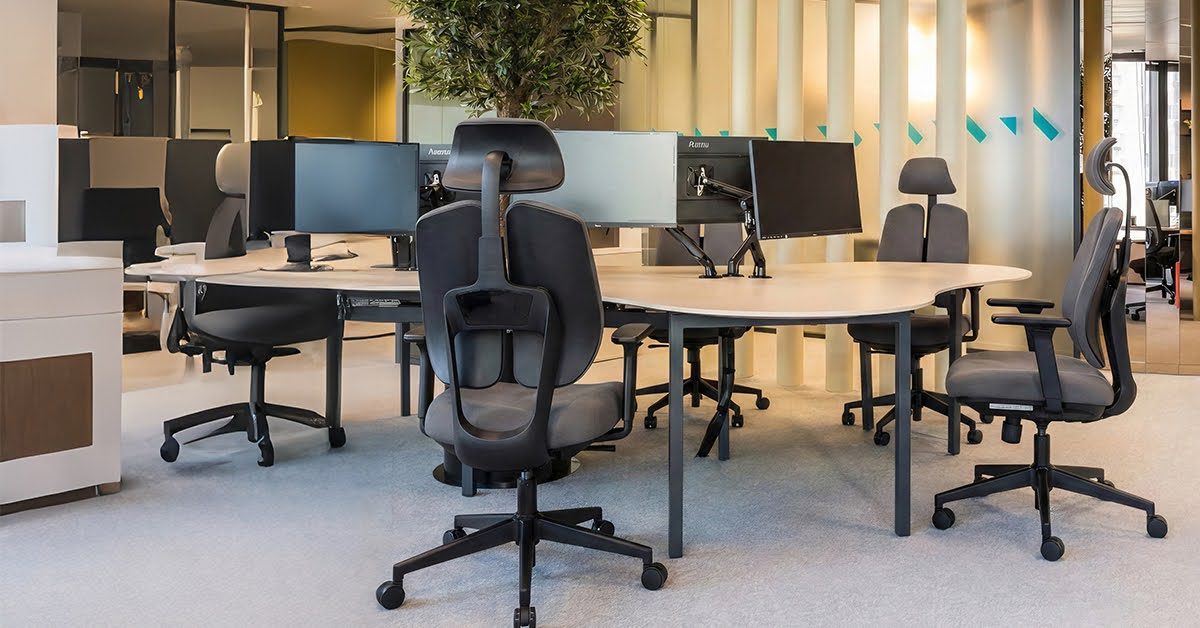
Geiger | Architectural Private Office Systems
For executive enclaves requiring absolute focus and professional prestige, Geiger One offers a modular solution with an architectural soul. By utilizing a “casegoods” philosophy, it integrates storage and technology into the room’s structure, eliminating the visual bulk of traditional executive furniture.
- Recommendation Index: ★★★★★
- Core Positioning: Superior wood craftsmanship and architectural integration tailored for elite private offices.
Eureka Ergonomic | Architect of Visual Order for Modern Minimalist Spaces
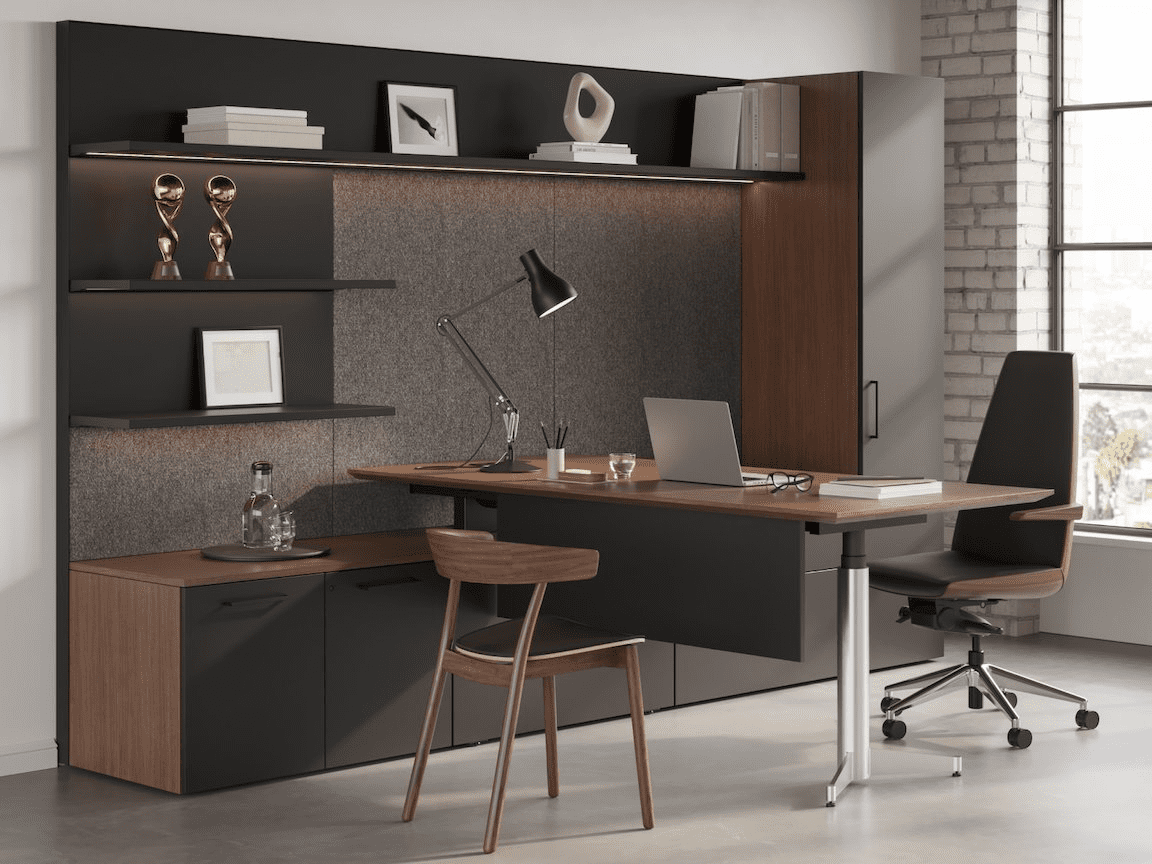
In multi-functional collaborative zones or modern executive suites that prioritize efficient communication and minimalist aesthetics, Eureka Ergonomic explores the commercial equilibrium between “visual reduction and ergonomic addition” through its Royal Slim Series.By pairing a refined linear profile with a high-strength aluminum alloy base, this solution resolves the visual density common in traditional office seating while ensuring long-term physiological comfort through an integrated high-back design and deep lumbar support logic. In this series, Eureka precisely fuses minimalist design with commercial durability standards, assisting enterprises in achieving a sophisticated synergy between spatial order and operational performance.
- Recommendation Index: ★★★★★
- Core Positioning: A seamless balance of minimalist linear aesthetics and commercial-grade durability, defining the streamlined standards for 2026 modern workspaces.
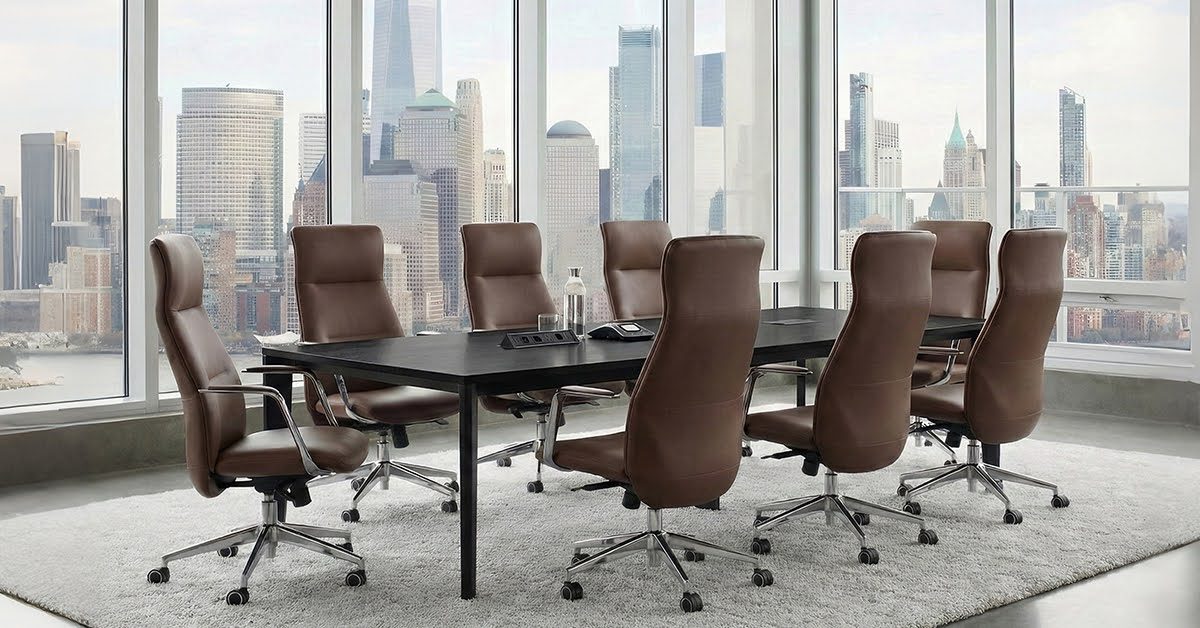
Haworth | Agile Collaborative Staff Zones
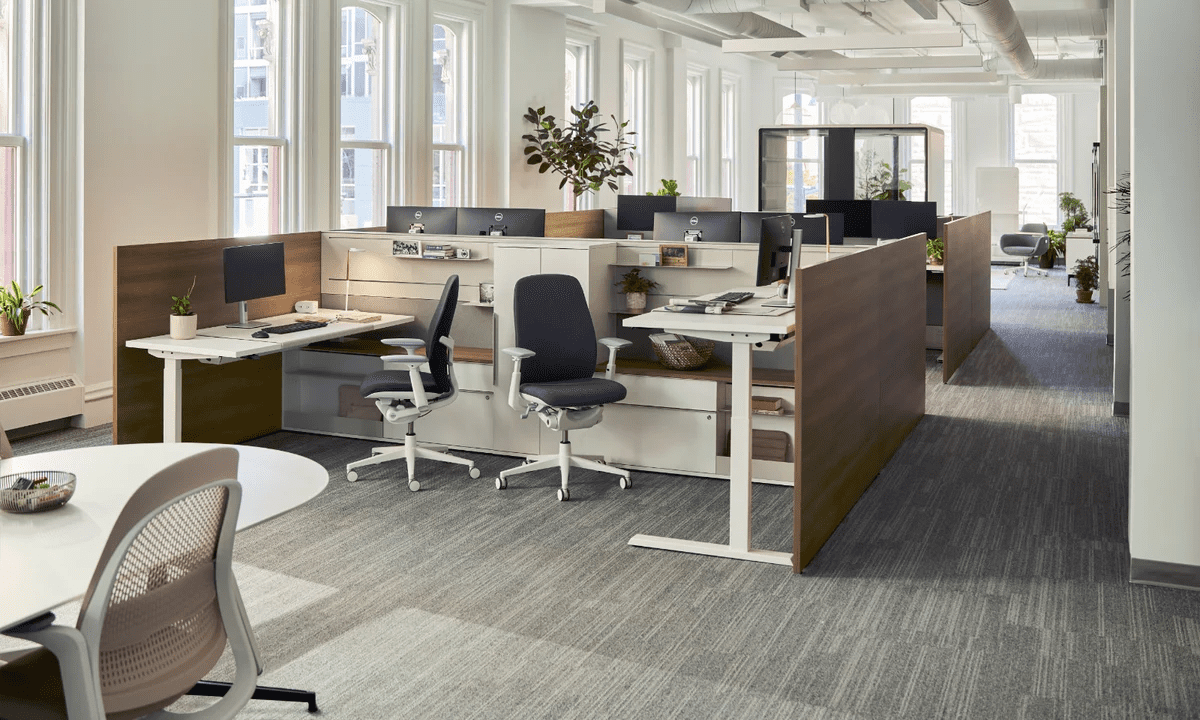
In high-density collaborative areas, Haworth focuses on “workstations that breathe.” Their solutions address the stagnation of rigid layouts through integrated height-adjustability and materials that meet rigorous environmental standards (such as Greenguard Gold), ensuring visual consistency and health-centric support across large-scale deployments.
- Recommendation Index: ★★★★☆
- Core Positioning: High reliability in standardized deployments with a strict focus on indoor environmental quality.

Hermanmiller | MillerIconic Management Aesthetics
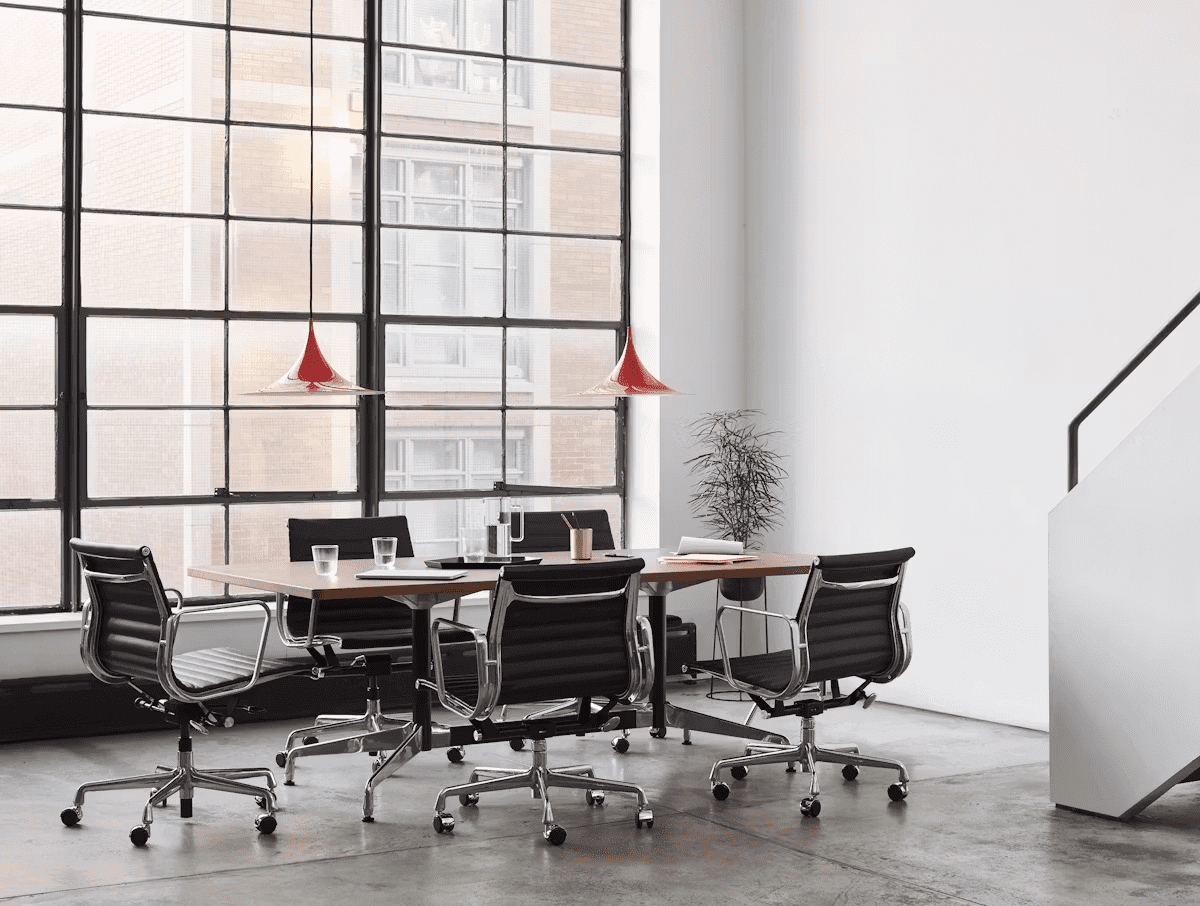
For boardrooms and management suites that serve as a company’s primary visual identity, the Eames Aluminum Group remains a definitive benchmark. Its refined aluminum frame and lightweight structure achieve a balance between classic stability and modern lightness, providing a professional image rooted in design legacy.
- Recommendation Index: ★★★★☆
- Core Positioning: Unmatched brand prestige and a professional silhouette that transcends fleeting design trends.

Eureka Ergonomic | The Foundation of Refined Executive Performance
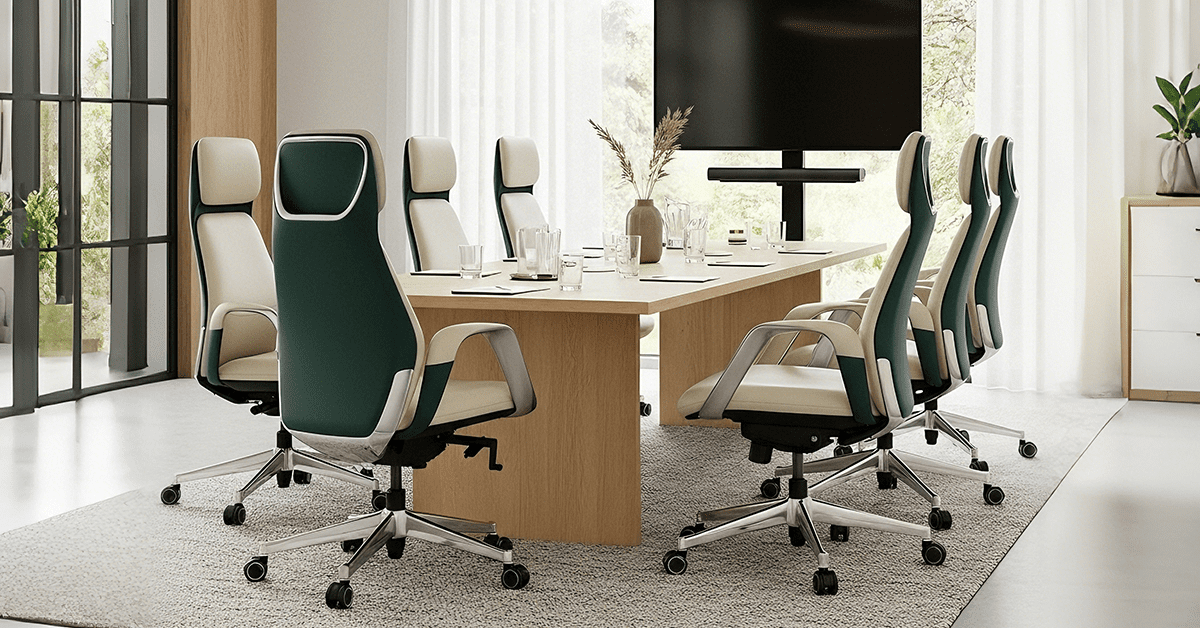
Eureka Ergonomic upholds a philosophy of “Refined Workspace,” emphasizing the alignment of technical logic with professional aesthetics. In the high-stakes executive suites of 2026, the brand focuses on providing a sense of “composed control” through systematic posture support. By integrating premium materials like full-grain Napa leather with sophisticated physiological support systems. Its‘ Serene Series ensures a steady state of focus for decision-makers. The design language favors a rational fusion of function and understated luxury, assisting enterprises in constructing a workspace ecosystem that reflects both rigor and high-tier professional status.
- Recommendation Index: ★★★★★
- Core Positioning: The convergence of technical aesthetics and premium materiality, defining the standard for “composed control” in modern executive spaces.

III. Conclusion: Strategic Investment in Continuity and Modularity
A successful 2026 commercial upgrade is measured by its Aesthetic Continuity and Modular Scalability.
- Design Continuity: By aligning materials across different zones—such as the wood textures of Geiger with the leather finishes of Eureka—businesses reinforce their brand identity and reduce visual fatigue.
- Modular Scalability: Selecting brands with extensible systems ensures that a workspace remains a flexible asset, capable of reconfiguring as team sizes and business objectives evolve.
In the 2026 landscape, the most effective offices are those that function as living organisms. By investing in systematic, consistent solutions, enterprises do more than just improve a work environment; they build a sustainable physical foundation for long-term growth.